Most coconut shipments that fail customs clearance don’t fail because of the fruit, they fail because of missing or misunderstood certifications. For B2B importers sourcing fresh coconuts from Vietnam, understanding exactly what FDA registration, GLOBALG.A.P accreditation and HACCP certification mean and how they interact is not optional. It is the foundation of a compliant, scalable supply chain. This is Vietnam Coconut Certifications Explained in full: what each standard covers, why it exists, and what serious exporters like Fado Agri do to maintain them year-round.
Fado Agri, founded in 2016 and headquartered in Vietnam with offices in the UAE, Malaysia, and Australia, has been exporting 500+ containers of certified fresh produce annually to markets including the United States, Middle East, Japan, South Korea, and Australia. Every shipment is backed by a three-layered certification framework, and this article breaks down exactly what that means for your import business.
1. Vietnam Coconut Certifications Explained: The Three-Tier Compliance Framework
Responsible fresh coconut exports from Vietnam are governed by three distinct but complementary certification systems. Together, they cover the entire value chain, from the farm to the processing facility to the importing country’s border.
| Certification | Scope | Issuing Body | Relevance for Importers |
| FDA Registration | Export to the USA; food facility compliance | U.S. Food and Drug Administration | Required for all food facilities exporting to the United States |
| GLOBALG.A.P | Farm-level Good Agricultural Practices | FoodPLUS GmbH (Germany) | Required or preferred by retailers and importers in Europe, Japan, UAE, and beyond |
| HACCP | Food safety hazard control in processing | Codex Alimentarius / national bodies | Required for processed products; widely accepted across all major import markets |
Importers who source from a supplier holding all three certifications gain a critical commercial advantage: reduced customs risk, faster clearance, and simplified retailer onboarding documentation.
Why Three Certifications Instead of One?
Each certification addresses a different link in the supply chain. GLOBALG.A.P controls what happens on the farm, pesticide use, soil management, worker welfare. HACCP controls what happens inside the processing and packing facility, contamination points, temperature management, traceability logs. FDA registration controls the legal right of a food facility to export to one of the world’s most scrutinized markets. No single certificate replaces the others.
2. FDA Registration: What It Means for Vietnamese Coconut Exporters
2.1. What Is FDA Registration?
FDA registration is a legal requirement under the U.S. Bioterrorism Act (2002) and enforced by the FDA Food Safety Modernization Act (FSMA). Any food facility, including packing houses and processing plants, that manufactures, processes, packs, or holds food intended for consumption in the United States must register with the FDA. Without a valid FDA registration number, a shipment cannot legally enter the American market.
For Vietnamese coconut exporters, FDA registration signals that the facility has voluntarily subjected itself to U.S. regulatory oversight, including the possibility of remote or physical FDA inspections.
2.2. What FDA Registration Covers in Practice
FDA registration does not certify product quality directly – it certifies the facility’s legal eligibility to export to the USA. However, maintaining active registration requires the facility to keep accurate records of:
- Product types and volumes handled
- Supply chain information (ingredient sourcing, storage)
- Preventive controls for food safety hazards
- Prior notice submissions for every shipment entering U.S. ports
Fado Agri maintains active FDA registration for its packing facilities in Vietnam, ensuring that buyers importing to the United States can present full documentation at the port of entry without delay.
3. GLOBALG.A.P Certification: Farm-Level Standards That Importers Increasingly Demand
3.1. What Is GLOBALG.A.P?
GLOBALG.A.P (Good Agricultural Practices) is the world’s most widely recognized farm assurance standard. Developed in Germany by FoodPLUS GmbH, it sets mandatory criteria for agricultural production, covering food safety, environmental sustainability, worker health and safety, and animal welfare. For fresh fruit and vegetable exports, GLOBALG.A.P is the benchmark standard accepted by major supermarket chains in Europe, Japan, South Korea, the UAE, and Australia.
Buyers often ask whether GLOBALG.A.P is really necessary for coconut exports. The answer depends on the destination market and buyer. For retail buyers in Europe or Japan, it is increasingly non-negotiable. For wholesale importers in the Middle East, it is a strong differentiator. For any buyer focused on long-term supply chain integrity, it is essential.
3.2. What GLOBALG.A.P Covers on Coconut Farms in Ben Tre and Tien Giang
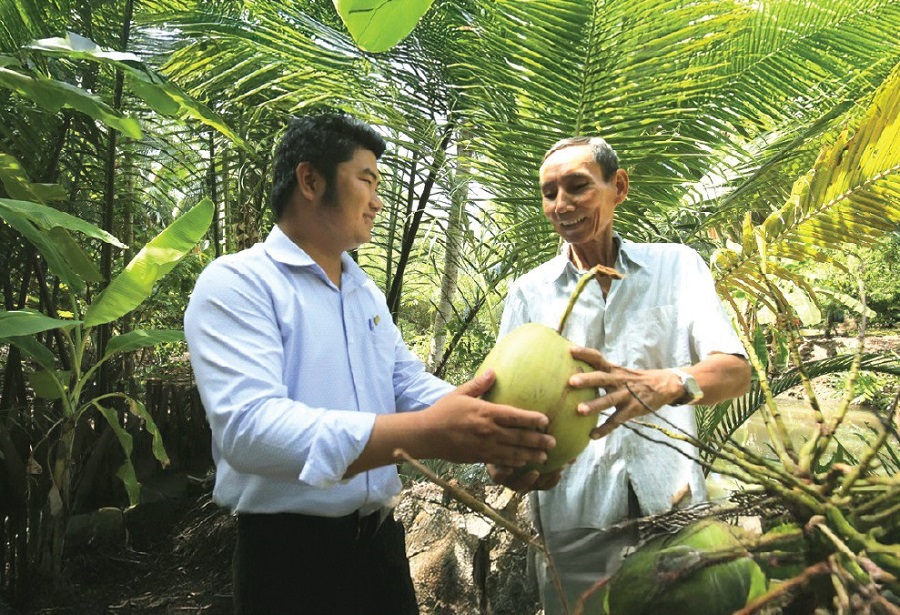
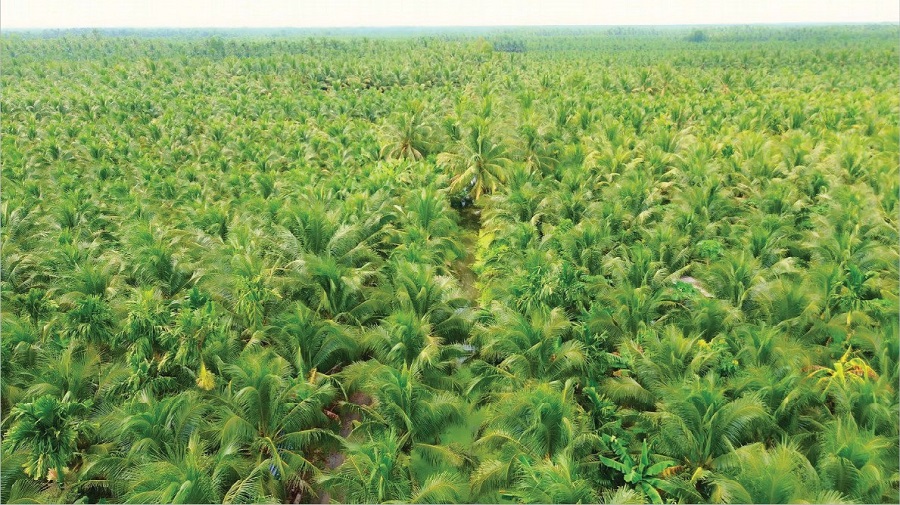
Vietnam’s two leading coconut-producing provinces, Ben Tre and Tien Giang, are where Fado Agri sources its fresh coconuts. GLOBALG.A.P certification on these farms covers:
- Pesticide and fertilizer management – approved chemicals only, with documented application records and pre-harvest intervals
- Soil and water quality monitoring – regular testing to prevent contamination at the root level
- Worker welfare compliance – documented working conditions, safety equipment, and training records
- Traceability systems – each farm plot is coded and trackable, so any batch can be traced to its field of origin
- Post-harvest handling – protocols for cleaning, grading, and transporting harvested coconuts without introducing contamination
This farm-level traceability is what allows Fado Agri to provide complete chain-of-custody documentation from farm to final destination, a transparency standard that premium importers and retail buyers in demanding markets require.
4. HACCP Certification: Controlling Hazards Inside the Processing Facility
4.1. What Is HACCP?
HACCP (Hazard Analysis and Critical Control Points) is an internationally recognized food safety management system developed under the Codex Alimentarius framework. Unlike GLOBALG.A.P, which focuses on farm-level practices, HACCP governs what happens inside processing and packing facilities. It requires manufacturers and processors to systematically identify, evaluate, and control food safety hazards: biological (bacteria, mold), chemical (pesticide residue, cleaning agents), and physical (fragments, foreign objects).
For coconut products specifically, HACCP is critical because fresh coconuts undergo cutting, de-husking, trimming, washing, and packaging before export, each step representing a potential contamination point.
4.2. HACCP in Fado Agri’s Fresh Coconut Processing Line
Fado Agri’s processing facilities operate under a certified HACCP plan that defines Critical Control Points (CCPs) across the production line. In practice, this means:
- Incoming inspection: Every batch of coconuts entering the facility is logged, graded, and checked against farm-of-origin records
- Washing and sanitization: Water quality and sanitizer concentrations are measured and recorded at defined intervals
- Cutting and trimming: Workers follow documented procedures and use equipment that meets hygiene standards; blade surfaces and work stations are sanitized on schedule
- Cold chain management: Temperature is monitored and logged from packing through pre-cooling to container loading
- Final inspection and labeling: Each outgoing shipment is cross-checked against the HACCP log before export documentation is issued
The result is a traceable, auditable record for every container, documentation that simplifies importer compliance, reduces insurance risk, and satisfies retailer onboarding requirements in markets like the USA, Japan, and Australia.
5. How Fado Agri Maintains Certification Across 500+ Containers Per Year
Holding certifications is one thing. Maintaining them across a high-volume export operation, 500+ containers per year, 6 cut types of fresh coconut, and shipments to 8+ international markets, is an operational discipline that few suppliers achieve consistently.
Fado Agri’s compliance framework operates on three levels:
- Farm partner audits: Fado Agri works with 20+ strategic farm partners in Ben Tre and Tien Giang. Each partner undergoes regular GLOBALG.A.P compliance reviews. Non-compliant batches are rejected before they enter the supply chain.
- Facility self-audits and third-party inspections: Internal HACCP audits are conducted monthly. Third-party auditors conduct independent facility reviews aligned with annual certification renewal cycles.
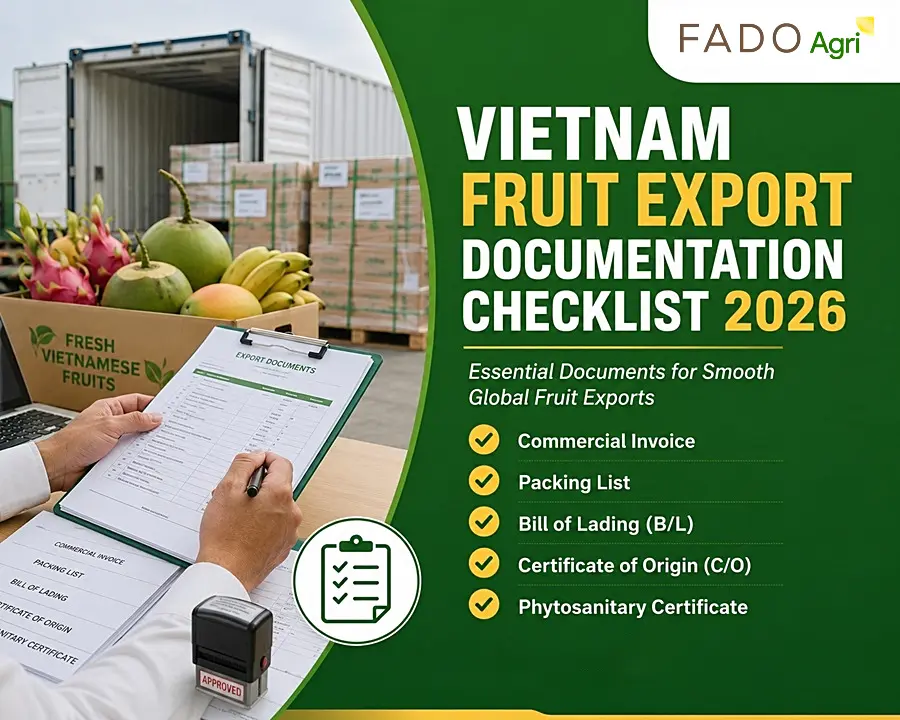
- Export documentation management: A dedicated team manages FDA registration renewals, phytosanitary certificates, certificate of origin, and shipment-specific documentation for every outgoing container.
This system supports Fado Agri’s 10-step transparent supply chain process, which is designed so importers, not just the exporter, can verify compliance at every stage before committing to a purchase order.
6. Frequently Asked Questions
1. Do all Vietnamese coconut exporters hold FDA, GLOBALG.A.P, and HACCP certifications?
No. Certification is voluntary in many cases and requires significant investment in farm infrastructure, facility upgrades, and documentation systems. Only a minority of Vietnamese exporters maintain all three certifications simultaneously. Importers sourcing from uncertified suppliers assume significantly higher compliance and customs risk.
2. Is GLOBALG.A.P certification required to export coconuts to the Middle East?
It is not always a legal requirement, but it is increasingly demanded by retail buyers and large distributors in the UAE, Saudi Arabia, and Kuwait. Importers who hold GLOBALG.A.P documentation from their supplier gain easier access to premium retail channels and reduce documentation back-and-forth during onboarding.
3. What is the difference between HACCP and ISO 22000?
HACCP is a food safety system focused on hazard identification and control at Critical Control Points in the production process. ISO 22000 is a broader food safety management standard that incorporates HACCP principles but also covers organizational management systems, communication, and continual improvement. Many certified facilities hold both; HACCP is the core operational standard most directly scrutinized by buyers and regulators.
4. How can importers verify that a supplier’s certifications are current?
Buyers should request the certificate document directly and cross-reference the certificate number with the issuing body’s public database where available. For GLOBALG.A.P, the GLOBALG.A.P database (database.globalgap.org) allows public verification. For FDA registration, the FDA’s registration lookup tool is publicly accessible. Fado Agri provides up-to-date certification documents to all verified buyers upon request.
5. Does Fado Agri offer OEM or private-label coconut products with full certification documentation?
Yes. Fado Agri supports OEM and ODM production for buyers who require private labeling. Full certification documentation, including HACCP records, GLOBALG.A.P farm certificates, and FDA registration confirmation, is included in the export documentation package for OEM orders.
6. What coconut cut types does Fado Agri export under its certified supply chain?
Fado Agri exports fresh coconuts in 6 cut types, covering whole husked, trimmed round, trimmed pyramid, and other configurations, all processed under the same HACCP-certified facility and traceable to GLOBALG.A.P-certified farm sources in Ben Tre and Tien Giang.
Conclusion
For importers who want predictable compliance, faster customs clearance, and a supplier they can confidently introduce to demanding retail buyers, Vietnam coconut certifications explained in full comes down to three interlocking standards: FDA registration for U.S. market access, GLOBALG.A.P for farm-to-fork traceability, and HACCP for process-level food safety control. Together, these certifications represent not a checkbox exercise, but an operational commitment, one that Fado Agri has sustained across 8+ years and 500+ containers per year.
If you are evaluating Vietnamese coconut suppliers for a new or existing import program, Fado Agri’s compliance documentation is available for review. We work transparently at every stage of the supply chain, because our buyers’ trust depends on it.
Ready to source certified fresh coconuts from Vietnam? Contact Fado Agri’s export team today: