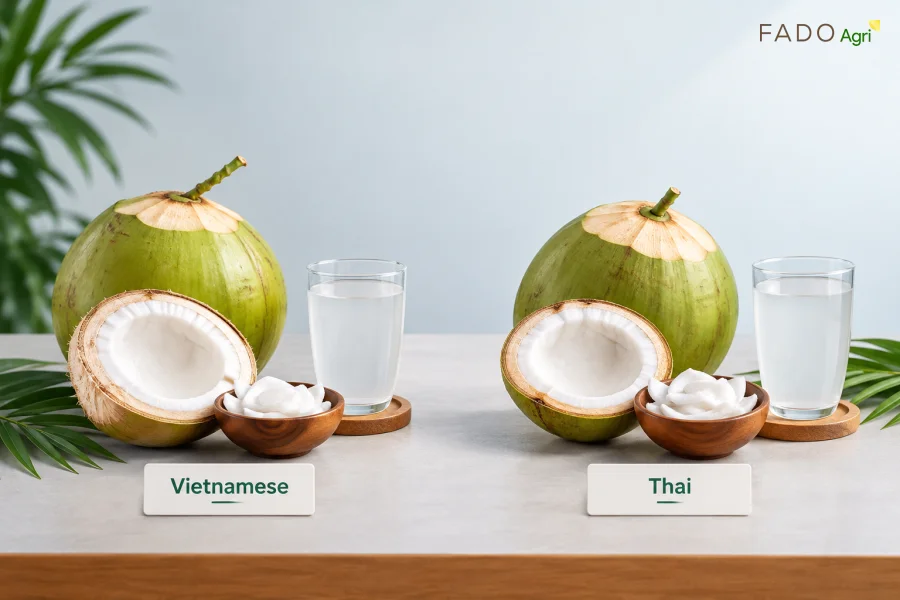

Fresh young coconut water may be considered as a beverage around exercise, but the information available here does not establish its hydration performance, composition, or suitability as a replacement for water or sports drinks. For athletes, the relevant choice depends on the session, personal needs, and verified product information—not on the word “natural” alone. This guide explains how to assess the option cautiously and how buyers can evaluate related product claims.

What fresh young coconut water may—and may not—offer athletes
Fresh young coconut water is a beverage that athletes may consider before, during, or after exercise. That makes it relevant to a hydration discussion, but it does not by itself prove a particular effect on hydration, endurance, recovery, or performance. Those stronger claims require product-specific information and evidence that has not been supplied for this article.
The distinction matters because a general beverage description and a sports-performance claim are not interchangeable. “Fresh” and “young” describe how a product is presented; they do not establish its composition or show that it suits a particular athlete or training session. Likewise, a natural origin does not demonstrate superiority over other drinks.
A careful conclusion is therefore limited: athletes can assess fresh young coconut water as one possible beverage, but should not assume it is a proven performance aid or a universal hydration solution. Its role depends on the exercise context, the person, and the actual product.
Why hydration needs depend on the exercise context
A beverage cannot be judged separately from the activity for which someone is considering it. Exercise duration, intensity, conditions, and individual circumstances can all affect what a person needs. These factors make one-size-fits-all recommendations unreliable, especially when no product composition or specific sports-nutrition evidence is available.
Consider the session before choosing a drink
A casual or shorter session may lead someone to make a simple beverage choice, while a demanding or prolonged activity may prompt a more deliberate hydration strategy. That distinction does not establish which drink is appropriate; it signals that the decision should reflect the activity rather than a broad product slogan.
An athlete considering a drink for a planned training session can start by asking what the session involves and whether they have particular requirements. If the activity is demanding or their needs are not straightforward, general product language may not be enough to guide the decision. This article does not prescribe an intake plan or provide medical or individualized sports-nutrition advice.
Separate everyday use from a planned hydration strategy
Choosing a beverage for everyday enjoyment is not the same as relying on it to meet a defined need during sport. For a deliberate strategy, a person may need information about the product and their own circumstances that a general description cannot provide. Athletes with health concerns or specific sports-nutrition requirements should seek guidance appropriate to those needs rather than infer suitability from a product category.
How to assess coconut water as an option around exercise
The useful question is not simply whether a beverage is described as hydrating, but what verified product details and personal context support that choice. For fresh young coconut water, the materials available for this article do not include verified composition or serving information. Avoid filling that gap with assumptions about nutrient values or effects.
Check the product rather than generalizing from the category
Products described as coconut water should not automatically be treated as identical. Before relying on a nutrition or hydration claim, look at the actual product label and serving information. Depending on the format, the details a buyer or athlete can review may differ; a product description alone is not a substitute for a documented specification.
The available information does not establish electrolyte, carbohydrate, calorie, or sugar values for a specific product. It also does not provide evidence of a particular hydration effect. Without those details, it would be inappropriate to estimate a serving’s composition or make a product-specific recommendation.
Match the choice to personal needs and the activity
Practical considerations can include whether someone likes the taste, tolerates the product, and can access it in the context in which they plan to use it. These are considerations for choosing a beverage, not proof of a performance benefit. They also do not show that the same choice will suit another athlete or another type of session.
If an athlete needs a structured hydration approach, general marketing language cannot replace individualized advice or relevant product evidence. A cautious assessment keeps the question specific: what is known about this product, what is the intended use, and what personal requirements may affect the decision?
Coconut water versus water and sports drinks: compare claims carefully
Athletes may want to know whether fresh young coconut water can take the place of water or a sports drink. The information supplied here does not support a ranking or a conclusion that coconut water performs better, is equivalent, or is suitable as a replacement. A fair comparison needs evidence tied to the actual products and intended use.
What a fair comparison would need
A meaningful comparison would begin with verified product information on a comparable basis, such as clearly stated serving details and composition. It would also need to consider the exercise context behind the claim. A description of one product cannot establish how it compares with a different beverage, and an unqualified statement about “hydration” may leave out important context.
For athletes and procurement teams, useful questions include:
- What product and serving does the claim refer to?
- Is the composition documented for that specific product?
- What intended use is being discussed?
- What evidence supports the exact comparison or outcome being claimed?
If those details are missing, the responsible conclusion is that the comparison has not been established—not that one beverage is necessarily better or worse.
Why broad replacement claims should be treated cautiously
Statements such as “replaces water,” “works like a sports drink,” or “improves hydration” can imply more than a general beverage description. They should not be repeated as established facts without relevant evidence. The information available for this article does not show that fresh young coconut water is an equivalent substitute for either water or sports drinks in every exercise context.
What athletes should look for in product and hydration claims
Hydration marketing can blur the difference between a product description and a specific claim about nutrition or athletic outcomes. Athletes and B2B buyers can reduce that ambiguity by asking for information that directly supports the language being used. Evidence about product identity or handling does not, on its own, establish an athletic benefit.
Distinguish product facts from benefit claims
Words such as “fresh” or “young” may describe how a product is presented, but they do not state a measurable hydration outcome. A composition claim needs product-specific documentation. A performance claim needs support that relates to the stated outcome and intended use.
This distinction is important in business-to-business product materials. Export documentation, handling information, and product specifications can help buyers understand the product and its supply chain. They should not be presented as proof that the beverage improves performance or meets a particular athlete’s needs.
Ask for evidence that matches the exact claim
Before using a hydration or nutrition statement in product communications, buyers can ask for the relevant product specification and supporting documentation. The evidence should match the exact product format and wording of the claim. If a statement concerns athletic performance, documentation about export handling alone would not support it.
A practical review can separate three questions: What is the product? What factual attribute is documented? What evidence supports the proposed benefit? Keeping those questions distinct helps importers, distributors, and retailers avoid turning a general product description into an unsupported promise.
Questions athletes and buyers commonly ask
The answers below stay within what can be concluded from the information available here. They do not provide intake recommendations or establish that coconut water replaces another beverage. For a product-specific decision, verified specifications and evidence for the precise claim remain essential.
Can fresh young coconut water replace water during every workout?
That cannot be concluded from the information provided. The article does not establish that fresh young coconut water is suitable as a replacement for water across all workouts or for every athlete. The activity, individual circumstances, and verified product details matter.
Is coconut water proven to improve athletic performance?
No performance outcome has been established for the product discussed here. The supplied information includes no sports-science research or product-specific evidence demonstrating an effect on endurance, recovery, or athletic performance. Avoid treating general hydration language as proof of those outcomes.
What should an importer request before using hydration claims in product materials?
Request the relevant product specifications and documentation supporting the exact wording under consideration. For a hydration or nutrition attribute, the information should apply to the product format being marketed. If the language implies a sports-performance outcome, buyers should seek evidence relevant to that specific claim rather than relying on general product or export information.
Discuss fresh coconut product specifications with FADOAgri
For procurement partners, the next step is to assess the actual product and its documentation rather than rely on a generic hydration description. FADOAgri exports fresh coconuts, and importers or distributors can contact the team to ask about available product specifications and export information. No specific sports-nutrition specification or athletic-use certification is established in the information available for this article.
To make an inquiry, contact FADOAgri by WhatsApp at (+84) 908 479 339 or email [email protected]. Buyers can describe the product format and documentation they need so the discussion stays focused on verifiable product information.
Phone: 0908 479 339 · Website: FADOAGRI · Contact us