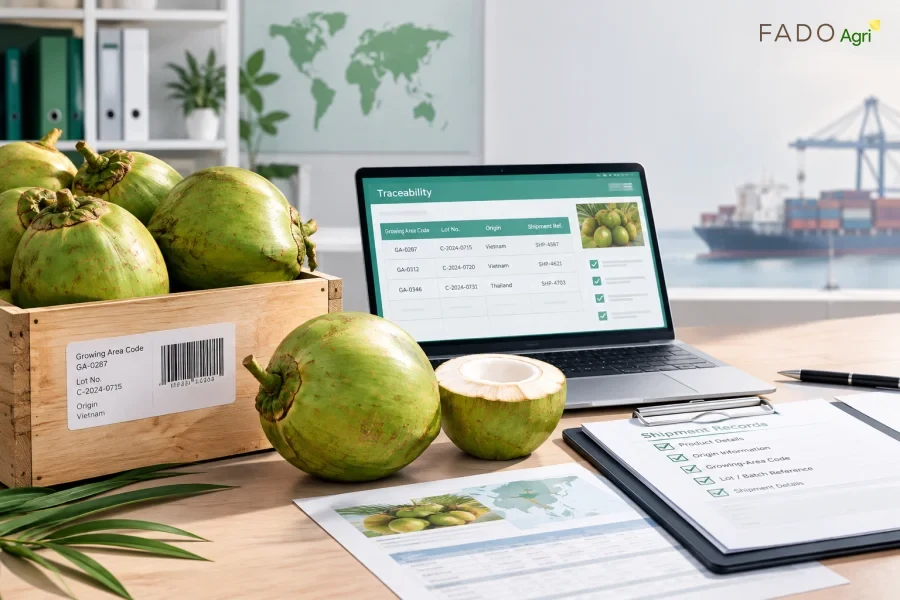

Diamond cut coconuts need careful handling from preparation through delivery. For importers and procurement teams, the key is to maintain a documented, product-specific process: protect the coconut from contamination and physical damage, use packaging that supports the required airflow, and keep storage and transport conditions within validated limits. The correct temperature and shelf life depend on the product configuration, treatment, packaging, and destination requirements, so they should be confirmed with the exporter before shipment.
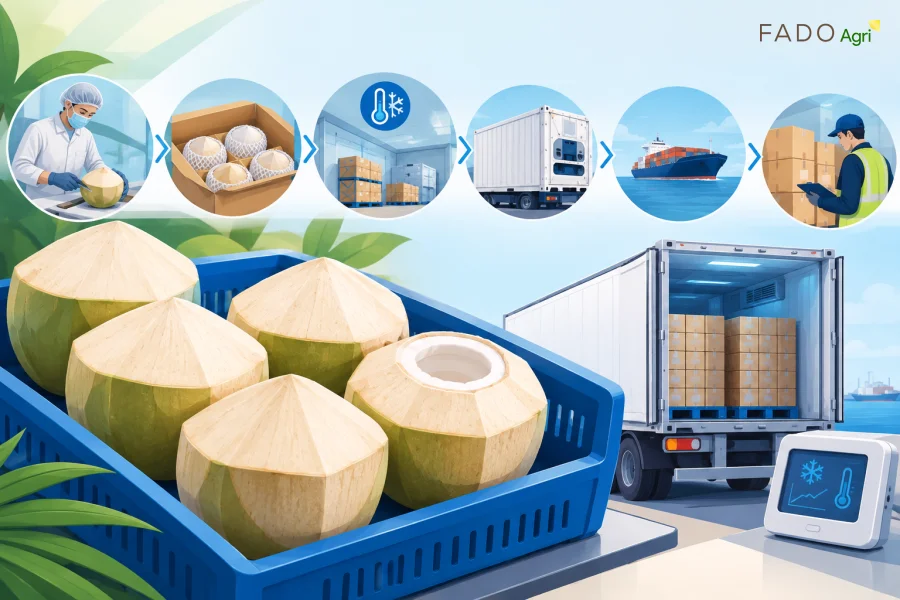
What “diamond cut” means for cold-chain planning
Diamond cut refers to the trimmed outer husk shape; it does not, by itself, confirm whether the coconut is sealed, opened, or subject to another treatment. Those details matter. An intact coconut and a product with an exposed opening have different handling and packaging risks. Buyers should confirm the exact product specification before approving a storage plan.
For an intact product, the main operational concerns include moisture loss, physical damage, contamination during handling, and temperature variation. If the product has an exposed opening or another preparation step, the risk assessment and validated controls may differ. Do not apply a generic protocol to both configurations.
Cold-chain controls by shipment stage
| Stage | Recommended control | Records to request or maintain |
|---|---|---|
| Product specification | Confirm whether the coconut is intact or opened, its preparation method, packaging, and intended storage conditions. | Approved product specification and handling instructions |
| Preparation and packing | Use hygienic handling practices and packaging suited to the product configuration. Protect coconuts from impact, compression, and avoidable exposure. | Packing record, lot identification, and quality checks |
| Pre-shipment storage | Follow the exporter’s validated product-specific temperature and handling instructions. Avoid relying on a general setting for all coconut products. | Storage logs and dispatch inspection record |
| Reefer loading | Confirm the reefer container is clean, in suitable operating condition, and set according to the approved shipping instructions. Keep airflow pathways clear and avoid blocking the unit’s circulation. | Container inspection, loading record, and set-point confirmation |
| Transit | Maintain the agreed transport conditions and monitor for interruptions or deviations. | Temperature records, alarm or deviation reports, and shipment documents |
| Arrival and receiving | Inspect packaging and product condition promptly. Record any visible damage, leakage, abnormal odor, or temperature deviation and follow the agreed claims process. | Receiving inspection and exception report |
Before loading: verify the product and prepare the shipment
Confirm the product configuration
The purchase specification should state what “diamond cut” means for the shipment. Confirm whether the shell is intact, whether any opening is present, how the product is prepared, and what packaging is used. If the shipment includes more than one product configuration, specify how each is identified and handled.
Agree on acceptance criteria before dispatch. These may cover appearance, packaging condition, lot coding, and any buyer-specific quality requirements. Criteria should be documented rather than assumed from the product name alone.
Check hygiene and packaging integrity
Handling areas, equipment, and packaging should be managed under the supplier’s applicable food-safety procedures. Packaging should protect the trimmed surface from contact, abrasion, and compression during handling and transit. It should also be compatible with the agreed storage and transport conditions.
Do not assume that a particular film, liner, carton, or pallet arrangement is suitable without confirming it against the exporter’s product specification. Packaging changes can affect ventilation, condensation, and product condition, so they should be reviewed before use.
Prepare the reefer container
Before loading, the responsible team should check that the reefer container is clean, dry, free of strong odors, and suitable for the cargo. Confirm the unit’s operating status and the approved transport instructions. Load cargo in a way that does not obstruct the container’s designed airflow paths, and secure it to reduce movement and impact.
A reefer set point is not a substitute for a validated handling protocol. The exporter and buyer should agree on the applicable operating range, monitoring method, and response to deviations for the specific product and route. Do not choose a set point solely because it is used for another type of coconut or fresh produce.
During storage and transit
Maintain continuity between the exporter’s storage conditions, the loading process, and the carrier’s transport instructions. Any handover between facilities or logistics providers should include the applicable handling requirements and the records needed to demonstrate continuity.
Temperature monitoring should be suitable for the shipment and agreed by the parties. Review records for interruptions or readings outside the approved limits, and document the time, location, and corrective action for any deviation. If the shipment experiences an excursion, follow the agreed assessment procedure rather than assuming the product remains acceptable or must automatically be rejected.
Avoid unnecessary door openings and delays during loading or transfer. These events can disrupt the intended transport conditions. The logistics plan should also account for the route, transit duration, transshipment points, and destination receiving arrangements; the applicable limits and contingency steps must be defined for the actual shipment.
Receiving and quality checks
At arrival, inspect the shipment promptly and compare the results with the agreed product specification. Check the container and packaging for damage, signs of moisture or leakage, displaced cargo, and any recorded transport deviations. Assess the product against documented acceptance criteria and keep the inspection findings with the lot and shipment records.
If there is a quality concern, preserve relevant records and notify the responsible parties through the agreed claims process. Photographs and traceable lot information may support the investigation, but they do not replace the buyer’s formal inspection or applicable import requirements.
Documents and buyer-supplier alignment
Before shipment, importers and procurement teams should align with the exporter on:
- Product configuration and preparation method.
- Packaging format, palletization, and lot identification.
- Product-specific storage and transport instructions.
- Monitoring responsibilities and the process for reporting deviations.
- Expected shipment documents and destination-market requirements.
- Receiving inspection criteria and the procedure for handling claims.
Phytosanitary and other import documentation should be confirmed against the destination market and shipment. GlobalGAP or other certification claims should be checked against the relevant supplier, product, and certification scope; do not infer certification status from the product description.
FAQ
What temperature should be used for diamond cut coconuts?
There is no single temperature that can be responsibly specified from the product name alone. The exporter should provide validated storage and transport conditions for the exact product configuration, treatment, and packaging. The buyer and carrier should use those instructions when setting up the shipment.
Can all diamond cut coconuts use the same storage protocol?
No. The protocol may differ depending on whether the coconut is intact or has an exposed opening, as well as on preparation, packaging, and the shipment route. Confirm these details before loading.
What should an importer check when the shipment arrives?
Review the product and packaging condition, lot identification, and available transport records. Compare findings with the agreed acceptance criteria and document any damage or deviation promptly.
Which records help demonstrate cold-chain control?
Depending on the agreed procedure, records may include storage logs, reefer-container inspection and loading records, temperature-monitoring data, deviation reports, and receiving inspection findings. The parties should agree in advance on who maintains and shares each record.
Plan the protocol around the confirmed specification
A reliable cold-chain plan starts with a precise product description and written, product-specific handling instructions. Importers should confirm the diamond cut coconut’s configuration, packaging, storage limits, monitoring requirements, and destination documents with the exporter before booking transport.
Contact FADOAgri’s export sales team for product specifications, MOQ, and an FOB/CIF quotation. Email: [email protected] | WhatsApp: (+84) 908 479 339 | Website: https://fadoagri.com/
Editorial verification before publication: Confirm FADOAgri’s current diamond cut coconut configuration, packaging specifications, validated storage and transport limits, shelf-life claims, monitoring procedure, and any applicable certification scope. Do not publish numeric handling parameters or certification claims until verified against current product documentation.