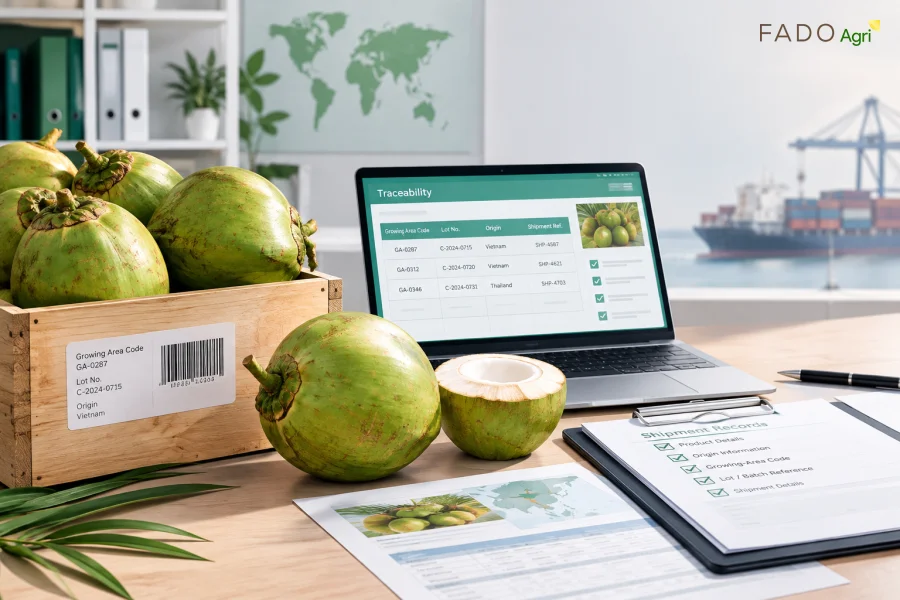

Tropical fresh fruit can lose quality during export if temperature, airflow, handling, or documentation is poorly managed. A reefer container helps maintain a controlled environment during transit, but it does not replace correct pre-cooling, suitable packaging, or a product-specific handling plan. For importers and procurement teams, the key is to agree on those requirements before loading and verify that each step—from packing to arrival—follows the approved shipment plan.

Start with a commodity-specific transport plan
There is no single temperature or handling setting suitable for every tropical fruit. Requirements can vary by fruit type, variety, maturity, harvest condition, packaging, transit duration, and destination-market rules. An unsuitable setting may cause chilling injury, accelerated ripening, moisture loss, or decay.
Before booking a reefer container, the exporter and importer should confirm:
- The fruit type, variety, maturity stage, and intended shelf-life requirements.
- The product-specific temperature and relative humidity range, where applicable.
- Whether the fruit requires controlled atmosphere or other specialized handling.
- The packaging design, ventilation needs, and pallet configuration.
- Expected transit and transfer conditions, including any planned transshipment.
- Destination-market requirements for phytosanitary documentation and MRLs compliance.
Document agreed parameters in the shipment instructions and product specification. Do not copy a setpoint from another commodity or a previous shipment without checking that it applies to the current product and route.
Editorial verification required: Before publication or use as an operating procedure, FADOAgri’s technical and export teams should confirm commodity-specific temperature, humidity, ventilation, and handling requirements against current product specifications and the destination market’s applicable rules.
Prepare fruit before loading
A reefer container is designed to maintain cargo conditions within its operating limits; it should not be relied on to rapidly cool warm fruit. The required product temperature should be achieved through an appropriate pre-cooling process before loading, based on the commodity’s handling plan.
Good preparation starts at harvest and continues through packing:
- Handle fruit carefully to reduce bruising, cuts, and pressure damage.
- Sort and pack according to the agreed grade and maturity specification.
- Use clean, suitable packaging that protects the fruit while allowing the airflow required by the shipping plan.
- Remove damaged or decayed fruit that could compromise the lot.
- Keep packed product in appropriate conditions while it awaits loading.
- Record relevant pre-cooling and lot information in the shipment’s quality records.
Packing and pre-cooling methods should be appropriate for the fruit. Do not apply a treatment or cooling method simply because it is used for a different tropical commodity.
Check the reefer container before use
A pre-loading inspection helps identify equipment or cleanliness issues before cargo is committed to the shipment. The shipper or loading team should follow the carrier’s procedures and the applicable operating checklist.
Confirm that:
- The container is clean, dry, and free from visible residue, pests, or strong odors.
- The door seals and visible interior surfaces are in suitable condition.
- The floor and air channels are not obstructed by debris or packaging materials.
- The refrigeration unit and monitoring equipment are operating as required.
- The container is suitable for the cargo and the agreed transport plan.
- The setpoint and other operating instructions match the approved shipment documentation.
If a container appears unsuitable or the equipment does not operate as expected, resolve the issue with the carrier before loading. Keep inspection records where required by the exporter’s quality system or the buyer’s instructions.
Load for airflow and cargo stability
Correct loading supports temperature management and helps reduce physical damage. Air needs to circulate through the cargo in the manner intended by the container and packaging design. Blocking air paths or loading beyond the applicable cargo-line guidance can interfere with circulation.
During loading:
- Confirm that the cargo has reached the condition specified in the shipment plan.
- Load promptly and avoid unnecessary exposure to unsuitable ambient conditions.
- Follow the container’s loading marks and the carrier’s instructions.
- Arrange cartons and pallets to preserve intended airflow paths and avoid obstructing supply or return-air areas.
- Secure the load to limit movement and compression during transport.
- Keep cargo clear of areas that must remain unobstructed for reefer operation.
- Close and secure the doors as soon as loading is complete, following the agreed procedure.
The exact loading pattern depends on the container, packaging, pallet dimensions, and cargo plan. Use a loading diagram when the shipment specification or carrier requires one, and retain a record of the completed load.
Set and monitor operating conditions
The reefer setpoint and other operating parameters should come from a verified, commodity-specific instruction—not an assumed standard for tropical fruit. The shipper, carrier, and importer should agree on the settings and escalation process before departure.
Monitoring can help identify interruptions or deviations during transit. Depending on the shipment arrangement, records may come from the reefer unit, carrier systems, or separate cargo-monitoring devices. Confirm in advance who can access the records, how often they are reviewed, and whom to contact if an alert or deviation occurs.
A practical monitoring plan should identify:
- The approved product and operating parameters.
- The source of temperature or other monitoring data.
- The parties responsible for reviewing the information.
- The notification and response process for a deviation.
- The records to retain for quality review and buyer communication.
Monitoring data is useful only when it is interpreted in context. A container-air reading is not necessarily the same as a measurement of fruit pulp temperature. When investigating a quality concern, review the measurement location, timing, equipment records, and handling history together.
Coordinate the cold chain beyond the container
A reefer shipment is one part of a wider Cold Chain logistics process. Quality can be affected before loading, during terminal handling, at transshipment, or after the container is discharged. Exporters and importers should clarify responsibilities at each handover rather than treating the container alone as a guarantee of product condition.
Before shipment, align on:
- Booking details and the planned route, including known transfer points.
- The party responsible for monitoring and responding to exceptions.
- Procedures for reporting delays or equipment concerns.
- Arrival handling, inspection, and onward transport arrangements.
- The process for sharing shipment records and reporting product-quality issues.
For fresh produce, clear communication between the exporter, freight forwarder, carrier, importer, and receiving team helps reduce avoidable uncertainty. Any change to route, handling, or operating instructions should be communicated to the relevant parties and documented.
Prepare export and compliance documents
Documentation should be checked against the product, shipment, and destination-market requirements before the cargo departs. Requirements can vary by market and may change, so confirm them with the importer and the relevant competent authorities or qualified trade-compliance personnel.
Depending on the shipment and destination, the document set may include a commercial invoice, packing list, transport document, and a Phytosanitary certificate. The buyer may also require product specifications, lot identification, traceability records, or supporting information related to MRLs compliance and SPS/TBT standards.
Check that product names, quantities, lot details, consignee information, and shipment references are consistent across documents. Resolve discrepancies before dispatch where possible. Do not assume that a document accepted for one destination will meet another market’s requirements.
Common mistakes to avoid
- Using a generic setpoint: Confirm the requirement for the specific fruit and shipment rather than reusing an unverified setting.
- Loading warm cargo and expecting the reefer to cool it quickly: Follow an appropriate pre-cooling plan before loading.
- Blocking airflow: Check packaging and load arrangement against the container and cargo instructions.
- Mixing incompatible products: Combine cargo only when their handling needs and shipping arrangements are compatible.
- Leaving no response plan for deviations: Assign responsibility for monitoring, escalation, and communication before departure.
- Treating documentation as an afterthought: Verify destination requirements and cross-check shipment details before dispatch.
- Ignoring arrival handling: Coordinate discharge, inspection, and onward movement with the receiving team.
Reefer shipment planning checklist
| Area | What to confirm before departure |
|---|---|
| Product | Fruit type, variety, maturity, grade, and lot identification |
| Handling plan | Approved product-specific conditions and any special requirements |
| Preparation | Packing condition and completion of the required pre-cooling process |
| Container | Cleanliness, visible condition, operating status, and required checks |
| Loading | Cargo arrangement, airflow paths, stability, and loading records |
| Monitoring | Data access, review responsibility, alert process, and record retention |
| Route | Booking, transfers, expected handovers, and exception communication |
| Documents | Destination-specific requirements and consistency of shipment details |
| Arrival | Receiving arrangements, inspection process, and onward transport |
Frequently asked questions
Can one reefer setting be used for all tropical fruits?
No. Handling requirements differ by fruit and shipment conditions. Confirm the appropriate settings and any special requirements for the specific commodity, maturity, packaging, and route.
Should fruit be cooled inside the reefer container?
Do not assume the reefer is a substitute for pre-cooling. The shipment plan should specify how the product is prepared before loading and the operating conditions required during transit.
Does a reefer container guarantee fruit quality on arrival?
No. A reefer supports controlled transport conditions, but quality also depends on harvest condition, packing, pre-cooling, loading, route handling, monitoring, and receiving arrangements.
What documents should accompany a tropical fruit shipment?
The required documents depend on the product and destination. Confirm the current requirements with the importer and relevant compliance personnel. A shipment may require a Phytosanitary certificate and other commercial, transport, traceability, or compliance records.
Plan the shipment with your procurement partner
A reliable reefer shipment begins with shared product specifications, clear operating instructions, and agreed responsibilities from packing through arrival. FADOAgri works with importers and procurement partners to coordinate export requirements for tropical fresh fruit. Contact our export sales team for product specifications, MOQ, and an FOB/CIF quotation, or inquire via WhatsApp at (+84) 908 479 339 or email [email protected].