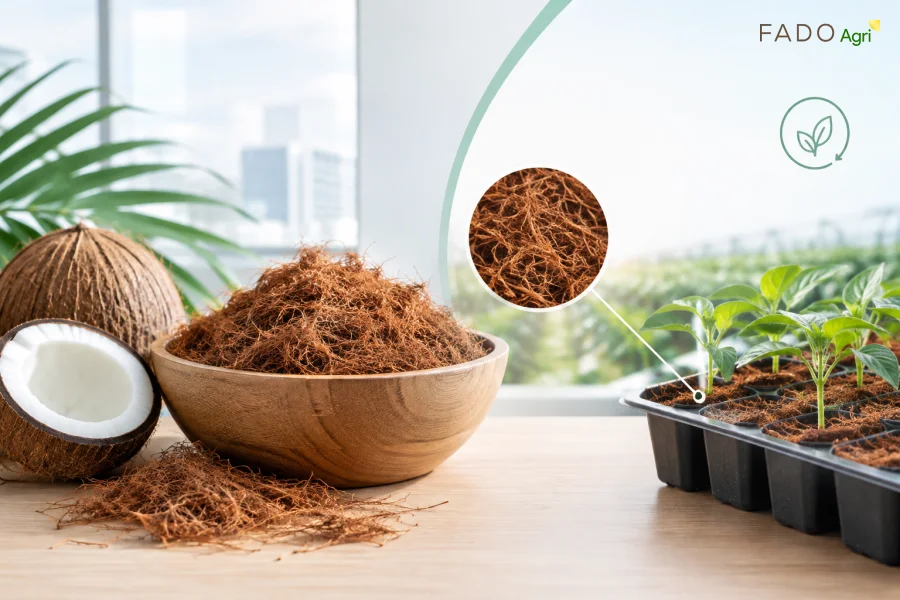
Coconut coir fiber can connect the use of coconut-derived materials with agricultural growing media, but its suitability depends on the specific product and application. For buyers considering coir in agriculture or interior materials, the key is to distinguish the material’s origin from verified product properties. This guide explains the supplied agricultural context and offers a practical framework for evaluating coir-related offers without assuming performance, certification, or environmental benefits.
What coconut coir fiber means in a circular agriculture context
Coconut coir refers to material derived from the outer husk of a coconut; commercial products may differ in form, composition, and processing. FADOAgri’s supplied company information identifies coconut coir as an organic growing-medium stream, which provides a relevant agricultural context. It does not, by itself, establish the specifications or suitability of any particular coir product.
Distinguish the raw material from the finished product
A material name is only a starting point for procurement. Before comparing offers, buyers should confirm whether the product is loose fiber, a blended material, a processed growing medium, or another finished form. The exact product identity should be supported by a supplier specification or other product-specific documentation.
This distinction matters because products associated with the same raw material may have different compositions, intended uses, and handling requirements. Buyers should not infer that a product has a particular grade, treatment, or performance simply because it is described as coconut coir fiber.
Circular agriculture is a way to consider how agricultural resources and by-product streams may be used. It is not proof that a particular product has a measured environmental advantage. Any claim about environmental performance needs a defined scope and evidence relevant to the product being assessed.
Where coir may fit in agricultural use
The supplied company reference identifies organic growing media as a use for coconut coir, making agriculture the clearest starting point for evaluating this material. That general application does not establish how a particular product will perform in a crop or production system. Buyers should match documented product characteristics to their own agronomic and operational requirements.
Questions to assess growing-media suitability
Ask the supplier to identify the product form, composition, processing information, intended use, and handling guidance. If test results are available, request the results and the methods used, then check whether they address the conditions that matter to your operation. Avoid relying on general descriptions in place of evidence tied to the product offered.
The review should account for the intended crop, growing system, and local operating conditions. A product that is suitable for one use should not automatically be assumed suitable for another. Where a trial or technical review forms part of your approval process, define in advance what evidence will be needed to assess the product.
Keep three questions separate during evaluation:
- What is the product? Confirm its form, composition, and processing details.
- What is it intended to do? Request the supplier’s stated application and handling guidance.
- What supports that use? Review product-specific test results or other relevant documentation, where available.
This approach allows procurement and technical teams to assess growing-media suitability without assuming characteristics such as water retention, aeration, or crop performance that have not been documented for the product.
Evaluating coconut coir fiber for eco-friendly interiors
Interior use requires a separate assessment from agricultural growing media. The information provided for this article does not identify specific coir-based interior products or verify their performance. Buyers should therefore treat interior applications as a product-development or sourcing question, not as an established FADOAgri offering or a confirmed use for every coir material.
Evidence to request before specifying a coir-based interior material
Start by defining the intended finished product and how it will be used. A material proposed for a furnishing, covering, panel, or another interior application would need to be identified and assessed as that specific product. The presence of coir alone does not establish its composition, suitability, or compliance with requirements for a particular market.
Ask the prospective supplier to provide, where applicable:
- The finished product’s identity, coir content, and other material components.
- Information about binders, coatings, treatments, and the manufacturing process.
- Intended use, installation conditions, and any stated limitations.
- Test documentation relevant to the intended application, with the test method and product configuration identified.
- Safety or regulatory documentation applicable to the product and destination market.
- Evidence supporting any environmental claims made about the product.
The evidence needed depends on the product type, end use, and market. For example, a buyer assessing a finished interior product should request documentation relevant to that finished product rather than relying on information about raw fiber alone. Requirements should be determined with the relevant technical, compliance, and procurement teams.
“Eco-friendly” is not a technical specification. Buyers should ask what the claim refers to, what part of the product or supply chain it covers, and what documentation supports it. Agricultural origin does not, on its own, verify biodegradability, indoor-air safety, fire performance, durability, acoustic performance, or reduced environmental impact.
A buyer’s checklist for comparing coir material offers
A useful comparison starts with the intended application and the documents that support it, rather than broad claims about natural or circular materials. The checklist below helps procurement teams identify gaps before requesting samples, approving a product, or discussing commercial terms. The evidence will vary by offer; no specifications or certifications should be assumed in advance.
| Evaluation area | Questions for the supplier | Evidence to request, where available |
|---|---|---|
| Product identity and form | What exact product is being offered? Is it raw fiber, a processed material, a growing medium, or a finished product? | Product description, images, and a specification identifying the form and intended use. |
| Composition and processing | What materials, binders, coatings, or treatments are included? How is the product processed? | Product-specific composition and processing information. |
| Intended application | Which use does the supplier recommend, and what conditions or limitations apply? | Application guidance and any relevant technical documentation. |
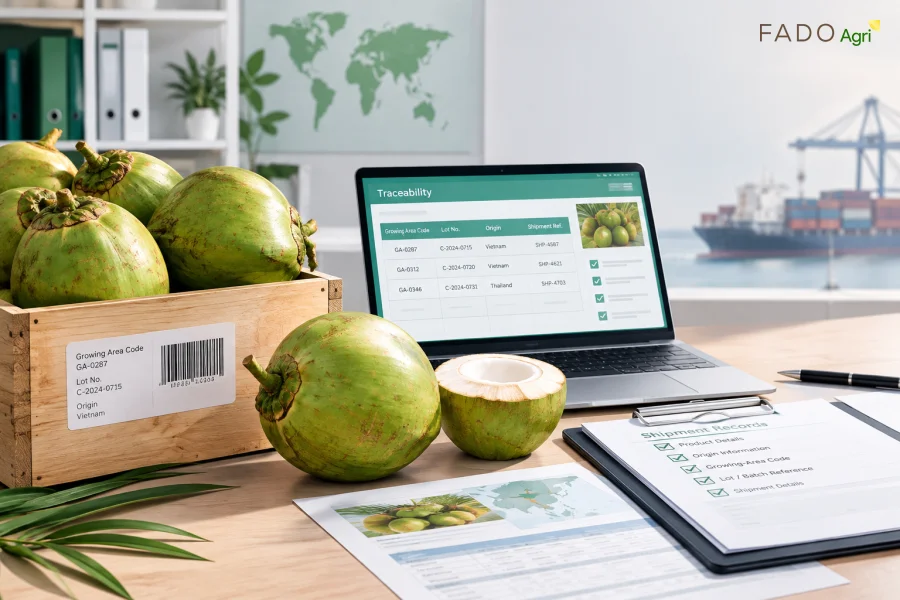
| Batch identification and traceability | How is the offered product or batch identified? What traceability information is available? | Batch or lot identification and the supplier’s available traceability records. |
| Technical performance | Which properties are important for the intended use, and have they been tested? | Relevant test results, including the method and the product configuration tested. |
| Safety and market requirements | What requirements apply in the destination market and to this product category? | Applicable safety or regulatory documentation, where relevant. |
| Packaging and handling | How is the product packaged, stored, and handled? Are there specific instructions? | Packaging details and handling or storage guidance. |
| Supply and commercial terms | What quantity, timing, and terms can be discussed for the specific product? | Product-specific availability information and a quotation, once confirmed by the supplier. |
Compare like with like. A test result is most useful when the tested product, configuration, and method are clear and relevant to the proposed use. If two offers differ in composition or intended application, a direct comparison may be misleading even if both are described as coir products.
How coir fits alongside other coconut by-product streams
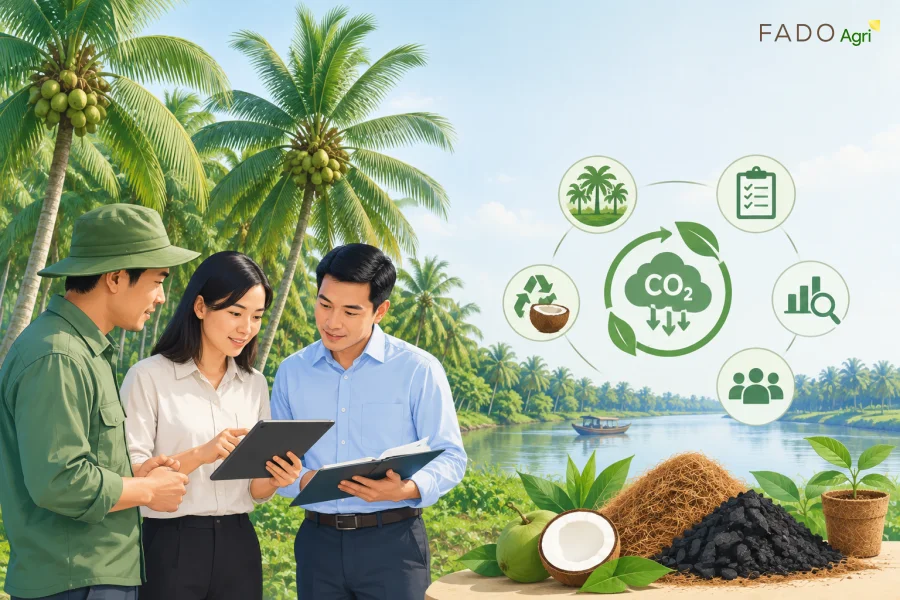
Circularity is easier to assess when each material stream is described accurately. The supplied company reference identifies coir as organic growing media, coconut shells as a source for activated carbon or biochar, and coconut meat as a source for dried products. These are distinct streams, not interchangeable applications of coir fiber.
For a broader sourcing discussion, request separate product specifications and supporting information for each stream. Availability, traceability, processing, and commercial terms should be confirmed for the specific product under consideration. A general description of coconut by-product utilization does not establish that every stream is offered by a particular supplier.
Likewise, a circular-agriculture narrative cannot replace product-level quality, safety, or market-access checks. Claims about waste reduction, lifecycle impacts, carbon reduction, or Carbon credit eligibility require supporting evidence and a clear scope. They should not be inferred from the use of coconut-derived materials alone.
Discuss product information and sourcing requirements with FADOAgri
Before moving from initial interest to procurement, confirm whether the exact coconut-derived product and documentation you need are available. FADOAgri’s supplied company information identifies coconut coir as organic growing media, but availability of coir fiber for export and any product-specific specifications should be confirmed directly. Buyers can also clarify the intended application, documentation needs, and commercial terms during that discussion.
Contact FADOAgri by WhatsApp or phone at (+84) 908 479 339, or email [email protected], to ask about available coconut-derived products and request relevant product information or a quotation. For coir-related inquiries, specify the intended use and destination market so the team can confirm what information is available for your requirements.
Phone: 0908 479 339 · Website: FADOAGRI · Contact us