
Coconut shells can serve as feedstock for both biochar and activated carbon, but these are distinct products with different production pathways and buyer requirements. For importers and procurement teams, the key is to confirm the intended application, production controls, and supporting test evidence rather than rely on a shared raw-material label. This guide outlines the process at a high level and offers practical questions for assessing a supplier; it is not a validated manufacturing recipe.

Why coconut-shell feedstock attracts industrial buyers
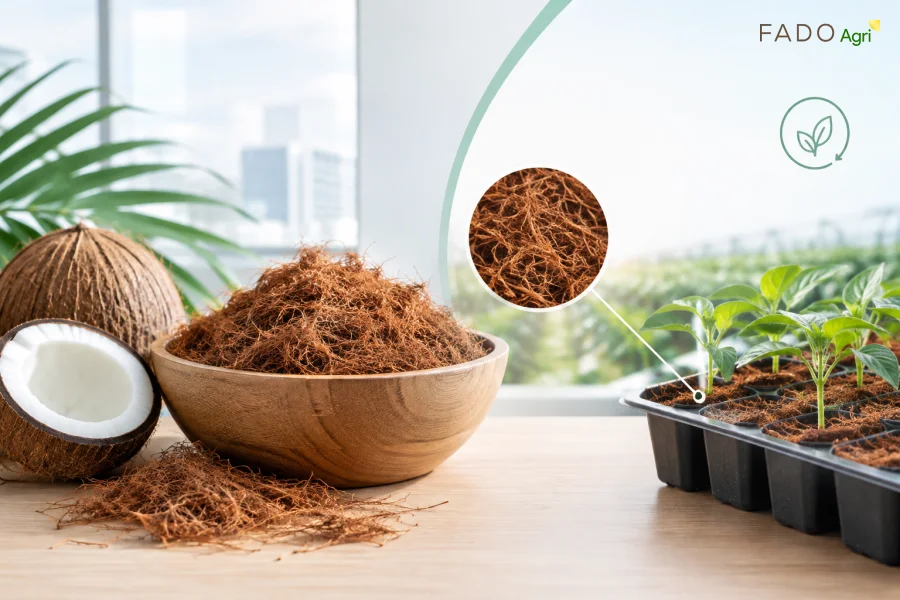
Coconut shells are a potential feedstock for carbon-based products, making them relevant to buyers assessing how agricultural residues may be used beyond their original purpose. However, the raw material alone does not establish a product’s grade, performance, or environmental benefit. Those depend on the material, its processing, the intended use, and evidence that supports the supplier’s claims.
Feedstock origin is only the starting point
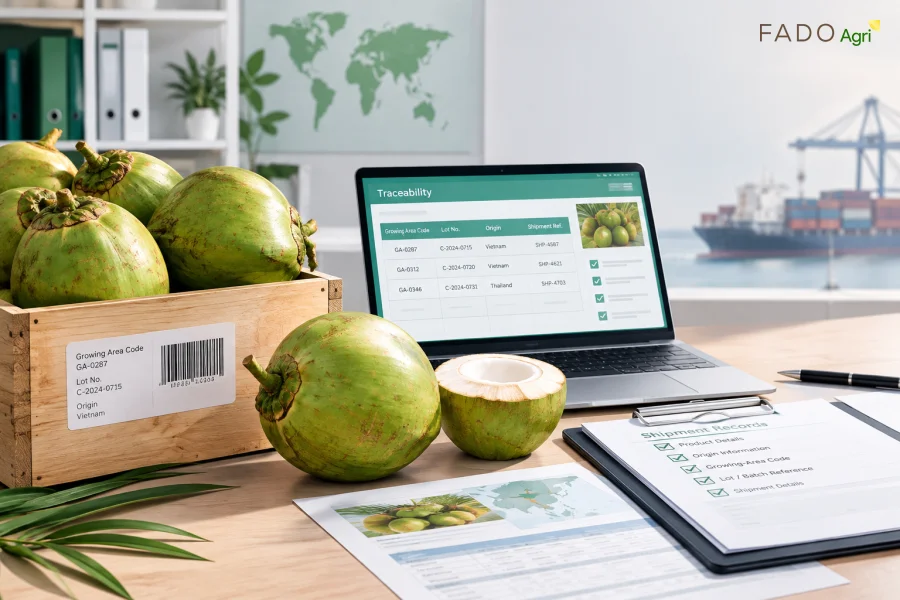
A buyer should first establish where the shells come from and how the supplier identifies and manages incoming lots. Useful questions include whether the origin is documented, how feedstock is collected and stored, and whether batches can be traced through production. Consistent identification matters when buyers need to compare samples, approve repeat orders, or investigate variation between lots.
The words “coconut shell” do not, by themselves, establish a particular quality level. Buyers should ask what preparation and acceptance checks are applied to the feedstock and whether the supplier records changes in its source or handling practices. The answers help define the scope of a supply offer; they do not replace testing of the finished product.
Biochar and activated carbon are different product targets
Both products may be made from carbon-rich biomass, but they are not interchangeable simply because they share a feedstock. Biochar is generally discussed as a carbon-rich material produced through thermal conversion of biomass, while activated carbon is processed to develop properties relevant to adsorption. Definitions and product requirements can vary by application, so buyers should confirm the supplier’s terminology against the product documentation and their own technical requirements.
| Buyer consideration | Biochar | Activated carbon |
|---|---|---|
| Product pathway | Thermal conversion of biomass, followed by any product-specific finishing | Carbonization followed by an activation route or other supplier-documented processing |
| Intended use | Must be stated and supported by product documentation | Must be stated, with performance evidence relevant to that use |
| Evidence to request | Product description, test methods, results, and batch identification | Activation and process information, relevant performance data, test methods, and batch identification |
| Key caution | A biochar report does not establish activated-carbon performance | A label or activation claim does not establish suitability for a particular application |
Biochar: assess against the stated use
The word “biochar” does not specify a single set of acceptance criteria for every buyer. Ask the supplier to identify the intended use and provide a product description, available test results, and the methods used to obtain them. A buyer should not assume that a material is suitable for a particular application based on its feedstock or product name alone.
Activated carbon: verify the route and relevant performance data
For activated carbon, buyers should ask what processing route the supplier uses and what product performance the supplied data supports. The type of activation and the evidence relevant to an application should be documented by the supplier rather than inferred from the term “activated.” A result reported for one intended use or one batch should not automatically be treated as proof of suitability for another.
How coconut shells move through a production pathway
A high-level process map can help procurement teams understand which records to request, but it is not an operating procedure. Actual process controls, equipment, and conditions are supplier-specific and should be confirmed through technical documentation. A buyer can use the stages below to structure a discussion without assuming that every producer follows an identical sequence.
From shell preparation to carbonization
The pathway typically begins with receipt and identification of the feedstock, followed by preparation before thermal conversion. Buyers can ask what preparation steps are used, how incoming lots are recorded, and whether the supplier documents relevant checks. Do not assume particular moisture limits, particle sizes, or cleaning requirements unless they are specified for the product and supported by the supplier’s documentation.
Carbonization is the thermal conversion stage in which biomass is processed to produce a carbon-rich material. Its operating conditions and controls are not universal values that can be inferred from the phrase “coconut-shell biochar.” For that reason, a buyer should request a process description and relevant batch records rather than rely on a generic process summary or an unsupported claim about equipment, yield, or operating parameters.
Additional processing for activated carbon
Activated carbon involves an additional processing consideration beyond basic carbonization. The supplier should disclose the activation route and identify the controls and checks relevant to the product being offered. Buyers should avoid treating a general description of activation as proof of a specific performance level; that requires relevant test data and a clear connection between the results, the product, and its intended application.
Finishing, batch identification, and records
Finishing and handling may include steps such as cooling, screening, storage, or packaging, depending on the producer and product. Ask which steps apply and how product identity is maintained through them. A process-flow diagram, batch or lot identifiers, and records linking the supplied sample to its production batch can help buyers evaluate whether the documentation represents the material under consideration.
What makes a product “high-grade” for a buyer
“High-grade” is not a complete purchasing specification. Buyers should translate the phrase into acceptance criteria for a defined application and confirm that the supplier’s test methods and results address those criteria. A product should not be ranked as suitable merely because a supplier uses a grade label or because the feedstock is coconut shell.
Translate the description into acceptance criteria
Before requesting a quotation or approving a sample, define what the product needs to do and what evidence is necessary for approval. Relevant property categories depend on the intended use, so a technical specialist or the buyer’s product documentation should guide which measurements matter. Avoid relying on generic thresholds or grade names unless the buyer and supplier agree on their meaning and supporting evidence.
For either product, request a technical data sheet where available and ask for a certificate of analysis or equivalent test report if the supplier provides one. Confirm the sample or lot identifier, the date or batch represented, and the test methods used. These details help establish what the results describe; they do not automatically establish that a product meets requirements that have not been defined.
Check test methods, batch identity, and documentation
A report is more useful when it identifies who performed the analysis, which sample was tested, and how the results relate to the material offered. Buyers may also ask whether testing was performed by the supplier or an external laboratory and whether the method is appropriate for the intended decision. Distinguish a supplier declaration from analytical evidence, and do not assume a result from one batch applies to every future shipment.
A practical pre-qualification checklist is:
- What exact product is being offered, and what intended use does the supplier state?
- What feedstock origin and lot-identification information is available?
- Which process records and batch controls can the supplier provide?
- What tests were performed, by which methods, and on which sample or lot?
- How will the supplier communicate changes in feedstock, processing, or product documentation?
- Which additional technical or safety documents are needed for the buyer’s application and destination market?
Sourcing and compliance questions for importers
A suitable sample is only one part of a sourcing decision. Buyers also need to understand repeatability, documentation, shipment arrangements, and the rules that apply to the specific product and destination. Requirements can depend on the product’s intended use and the importing market, so one certificate or test should not be assumed to satisfy every buyer or jurisdiction.
Questions to ask before approving a supplier
Ask the supplier to identify the exact product, any grade designation, its intended use, and any limitations on how it may be described or used. Then confirm what information is available about feedstock traceability, production location, lot coding, process records, and change control. These questions help procurement teams assess whether the offer is sufficiently defined for a technical review and whether repeat orders can be evaluated on a comparable basis.
Before sampling or purchase, clarify the packaging format, storage and handling information, shipment configuration, and how lot identity will be maintained through dispatch. Request current technical and safety documentation relevant to the product and shipment. The buyer’s compliance team should determine which destination-market requirements apply to the particular material and use.
Do not assume that documentation associated with fresh produce, such as GlobalGAP or a phytosanitary certificate, automatically certifies biochar or activated carbon. The relevant requirements need to be established for the processed product and its intended market. A supplier should identify the documents it can provide, while the importer confirms what is required for its own transaction.
Environmental claims need evidence separate from product quality
Coconut-shell feedstock can be part of a circular-use discussion, but its origin alone does not demonstrate a quantified environmental benefit or a carbon-credit outcome. Buyers should evaluate sustainability statements separately from technical product performance and ask what evidence supports each claim. A product test and an environmental assessment answer different questions.
For claims about lifecycle impacts, emissions, or carbon credits, ask what boundary, methodology, records, and verification support the statement. Do not treat the presence of a by-product feedstock as proof of carbon removal, a specific emissions reduction, or credits issued. Clear documentation allows sustainability teams to assess the claim without confusing a circularity narrative with independently substantiated results.
Discuss specifications before requesting a commercial offer
A productive inquiry begins with the buyer’s intended application, target requirements, destination market, and documentation needs—not with a broad request for “high-grade” material. FADOAgri’s supplied company information refers to coconut-shell biochar and activated carbon within its circular-use approach, but product specifications, manufacturing details, test reports, and certifications were not provided for this article. Buyers should therefore confirm directly whether relevant product information and commercial details are available for their requirements.
Importers and procurement partners can contact FADOAgri to ask about the scope of any relevant product offer and request supporting information where available. Share the intended application, target specification, destination market, expected volume, and documentation requirements so the inquiry can be assessed clearly. Contact the export sales team at [email protected] or via WhatsApp at +84 908 479 339 to discuss product information and a quotation where applicable.
Phone: 0908 479 339 · Website: FADOAGRI · Contact us