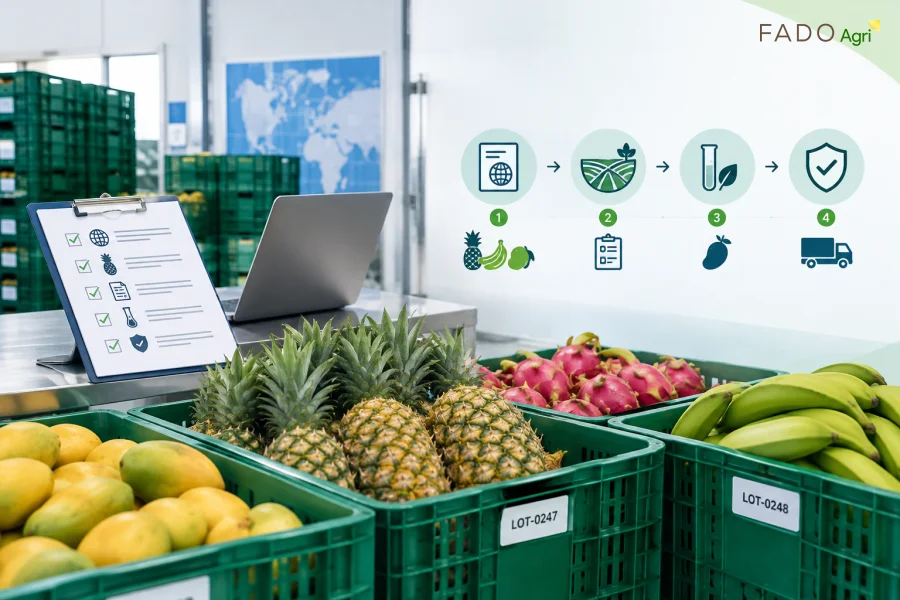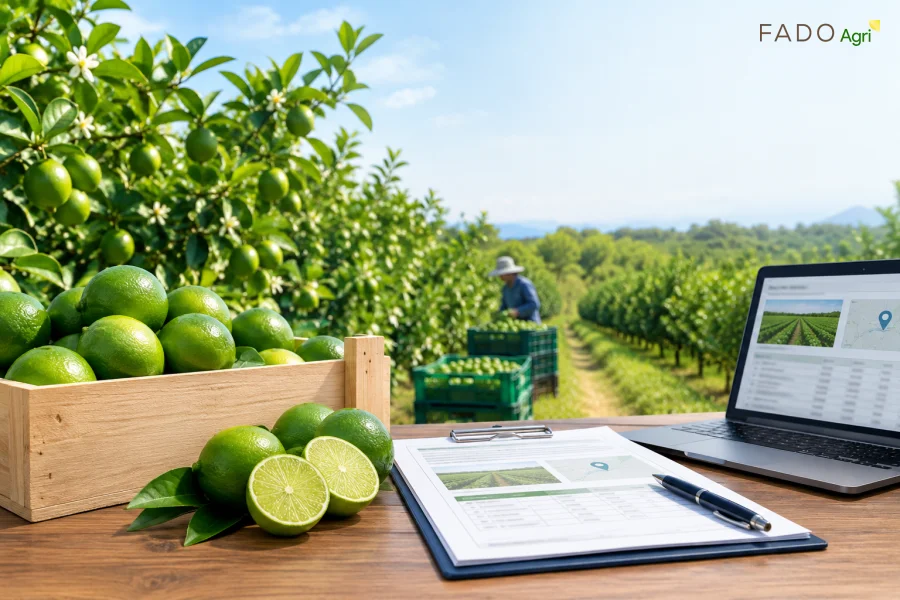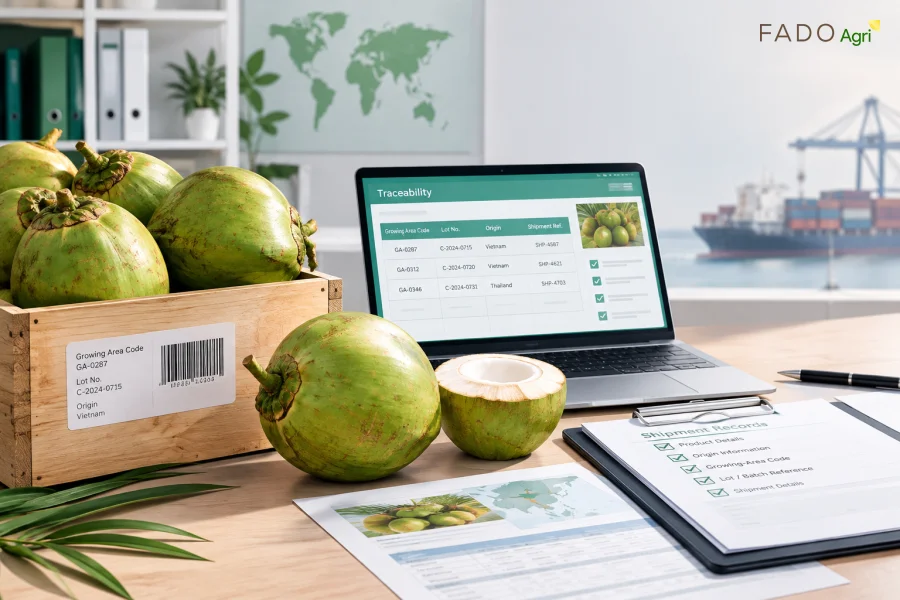

Vietnamese Cavendish bananas may merit consideration as a sourcing option, but whether a particular offer fits depends on the destination country, buyer specification, import requirements, and shipment plan. For importers and procurement teams, the first step is to define the intended market and customer—not assume that demand, regulations, or commercial conditions are uniform across the Middle East. This guide sets out how to assess an offer and what information to request before comparing suppliers or discussing an order.
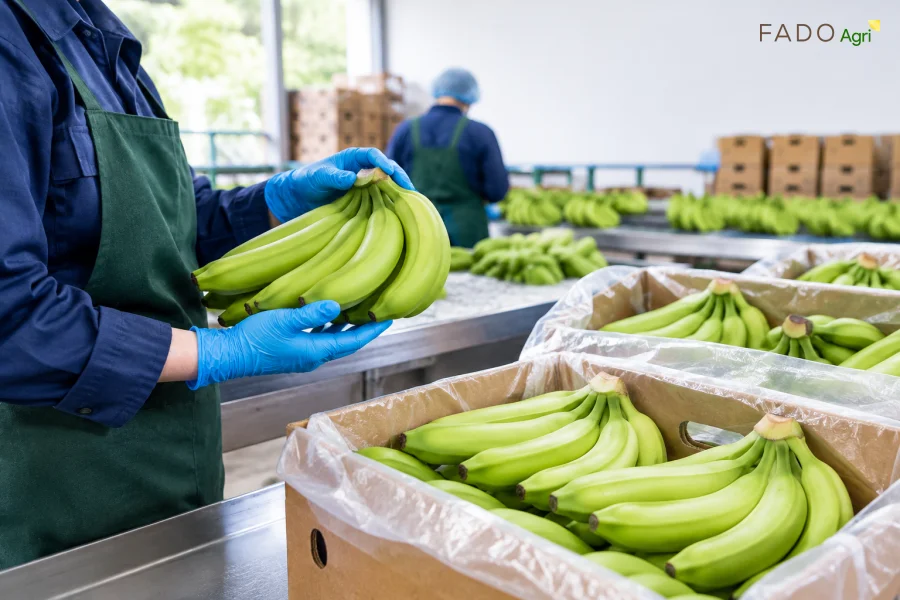
Why assess Vietnamese Cavendish bananas for Middle East sourcing?
The sourcing question is not simply whether a product can be offered from Vietnam; it is whether a specific lot and supplier proposal meet your commercial and operational needs. Treat the opportunity as a buyer-led assessment, using evidence relevant to your target country and sales channel rather than broad assumptions about regional demand.
Separate regional interest from a country-specific sourcing case
The Middle East includes distinct destination markets, each with its own import conditions, commercial relationships, and buyer expectations. A general statement about the region cannot establish that Vietnamese Cavendish bananas are eligible for import into a particular country or suited to a particular customer. Before approaching suppliers, identify the destination country, the importer of record, the intended route, and the party responsible for confirming applicable import conditions.
Market size, current demand, competitor origins, prices, and market access are also time- and country-specific. Without evidence for the intended destination and period, avoid treating any of these as established advantages. Instead, use them as questions for your market research and procurement review.
Define the intended customer and sales channel
A wholesaler supplying food-service or traditional retail customers may work to different acceptance criteria from a supermarket procurement team. Retail buyers may need agreed presentation, pack, labelling, and inspection requirements; wholesalers may prioritize other attributes based on their customer base and distribution model. These are considerations to clarify with your actual customer, not universal rules for a channel.
Write down the required product presentation, handling expectations, and acceptance process before requesting quotations. This gives suppliers a consistent brief and makes it easier to compare proposals on an equivalent basis.
Match the banana offer to your buyer specification
Supplier discussions become more useful when the product is described in terms both parties can assess. Agree the required specification before comparing offers, and distinguish general product information from details tied to a particular lot or shipment.
Build a buyer specification before comparing suppliers
Ask prospective suppliers to provide their available Cavendish banana specifications and explain which details apply to the product they are offering. Depending on your purchasing process, relevant fields may include product condition and presentation, packing format, lot identification, and the inspection or acceptance procedure. The appropriate details and thresholds should come from your buyer requirements and the supplier’s documented offer; they should not be assumed from a generic product description.
If your customer has written requirements, share the relevant version with the supplier and ask them to identify any gaps. A quotation is easier to evaluate when it refers to the same specification, packaging expectations, and acceptance terms as competing offers.
Keep product claims distinct from shipment-specific evidence
A product sheet can describe a supplier’s general offer, but it does not automatically establish the condition, traceability, or documentation of a specific shipment. Ask how the proposed product will be identified and which records can be associated with the lot under discussion. Where a claim relates to a particular farm, packing operation, test, certificate, or consignment, request evidence that makes that connection clear.
Likewise, do not treat a general certification statement as proof that every product, site, or shipment is covered, or that the product meets every destination requirement. Confirm the scope and relevance of any evidence against the product and market you are assessing.
Check destination-market requirements before planning an order
Commercial suitability does not by itself establish import eligibility. First identify the importing country and the product and route in scope, then confirm current requirements with appropriate official sources and the parties responsible for import compliance.
Confirm the importing country and applicable requirements
Clarify the destination, importer of record, product form, and intended shipment route before relying on a broad regional statement. Applicable SPS/TBT standards and other import conditions can differ by country and may change. Check the requirements relevant to the specific product and shipment rather than assuming that approval or documentation in one market applies elsewhere.
Depending on the destination and shipment context, the review may include phytosanitary documentation, MRLs compliance, labelling, or other required records. Do not assume that any one document or test is universally required. Confirm which requirements apply, who must provide each item, and when it must be available. If a phytosanitary certificate or other shipment document is required, establish how it will be obtained and reviewed before shipment planning is finalized.
Link evidence to the offered product and shipment
Evidence serves different purposes. A supplier statement, a farm or system certification, a test result, and a shipment document are not interchangeable; each should be assessed for what it actually demonstrates. For example, ask whether any certificate or test evidence covers the relevant product, site, period, or lot, and whether it is suitable for the destination’s requirements.
Keep this review focused on the proposed transaction. Rather than requesting documents without context, give the supplier the destination and product specification, then ask which relevant evidence is available and what remains to be confirmed. This helps expose gaps before they become shipment-planning issues.
Evaluate post-harvest handling and Cold Chain logistics
The proposed product should be assessed alongside the way it will be handled from preparation through delivery. Ask for a clear account of the relevant process and shipment responsibilities; a general capability claim alone does not show how a specific lot or route will be managed.
Review the handling process and shipment plan
Ask the supplier to describe the post-harvest handling stages relevant to the offered bananas, how product lots are identified, and which parties are responsible at each handover. The purpose is to understand the planned process and records—not to infer performance from a company profile or assume that every shipment follows the same arrangement.
Review the proposed Cold Chain logistics plan, including how the Reefer container arrangement fits the shipment and who is responsible for coordinating the relevant steps. Request the route and timing assumptions that apply to the specific offer, but do not rely on generic transit or shelf-life claims. Confirm any operational details directly with the parties managing the shipment.
Agree how arrival condition will be assessed
Before an order, decide how the receiving party will check the shipment and document any concerns. The buyer and supplier can agree which records, inspection steps, and communication process are appropriate for the transaction. Clear responsibilities help both sides understand how product condition and any discrepancies will be handled on arrival.
FADOAgri’s supplied company profile describes a Farm-to-Container Cold Chain. This is a company-profile statement, not evidence of performance for a particular Cavendish banana lot or route. Buyers considering an inquiry should request details relevant to the proposed product and shipment.
Use a practical checklist to compare supplier offers
A structured review helps procurement teams see which parts of an offer are supported and which need clarification. Use the checklist below as a starting point, and adapt it to the buyer’s destination, channel, and purchasing requirements; no single document guarantees quality or import approval.
Buyer checklist for an initial sourcing review
| Assessment area | What to ask | Evidence or detail to request |
|---|---|---|
| Destination and channel | Which importing country, customer, and sales channel is the offer intended for? | The destination and customer requirements used to prepare the offer. |
| Product specification | What Cavendish banana presentation and packing format is being offered? | Available product specifications and any agreed acceptance or inspection procedure. |
| Lot identification | How will the product under discussion be identified? | The lot or shipment identification details available for the proposed offer. |
| Compliance | Which destination-specific requirements apply, and who is responsible for each? | Relevant documents or evidence, with scope tied to the product and shipment where applicable. |
| Post-harvest handling | Which handling stages and responsibilities apply to the offer? | A description of the process and the parties responsible at each handover. |
| Cold Chain and Reefer container | What shipment arrangement is proposed, and who coordinates it? | Route and timing assumptions and relevant shipment-plan details for the offer. |
| Availability and planning | What seasonal availability and shipment timing can the supplier confirm? | Current, offer-specific availability and planning information. |
| Commercial terms | Which terms are included in the quotation? | A written quotation specifying applicable terms; do not assume MOQ, price, or delivery conditions. |
Resolve missing information before comparing quotations
Use a simple sequence: define the destination and customer specification, request evidence that matches the proposed product, resolve any compliance or logistics gaps, and then compare commercial offers. If an important detail is unavailable, record it as an open question rather than treating an assumption as a confirmed term. This keeps the comparison useful without overstating what the supplier has demonstrated.
Discuss a Vietnam Cavendish sourcing inquiry with FADOAgri
Once your destination, product requirements, and document questions are clear, a focused inquiry can help establish whether a supplier can respond to your needs. Share the target market and requested specification, and ask for information that can be matched to the product and shipment being discussed.
FADOAgri’s supplied company profile describes the business as an exporter of fresh coconut and tropical agricultural products. It does not establish that Cavendish bananas are currently available, or that a particular banana lot, farm, or packing site has a certification or destination approval. Buyers should confirm product availability and the scope of any relevant documentation directly before relying on it for procurement decisions.
For an initial B2B inquiry, buyers can request available Cavendish banana specifications, relevant shipment and traceability information, seasonal availability, and a quotation. Share the intended destination and requirements so the response can be assessed against the relevant market and shipment context. Any MOQ, packing option, FOB/CIF term, schedule, or market eligibility should be confirmed for the specific offer rather than assumed.
Contact FADOAgri’s export team via WhatsApp or phone at (+84) 908 479 339, email [email protected], or visit fadoagri.com.
Phone: 0908 479 339 · Contact us