

Choosing the Right Vietnamese Port for Agricultural Export
Port selection is one of the most overlooked decisions in an agricultural export chain — yet it directly affects your cold chain integrity, transit times, and final landed cost. Vietnam operates several container terminals capable of handling fresh produce and processed agricultural goods, but not all ports are equal in terms of reefer plug capacity, proximity to growing regions, or deep-sea vessel access. This guide breaks down the main options so you can plan your shipments with precision.
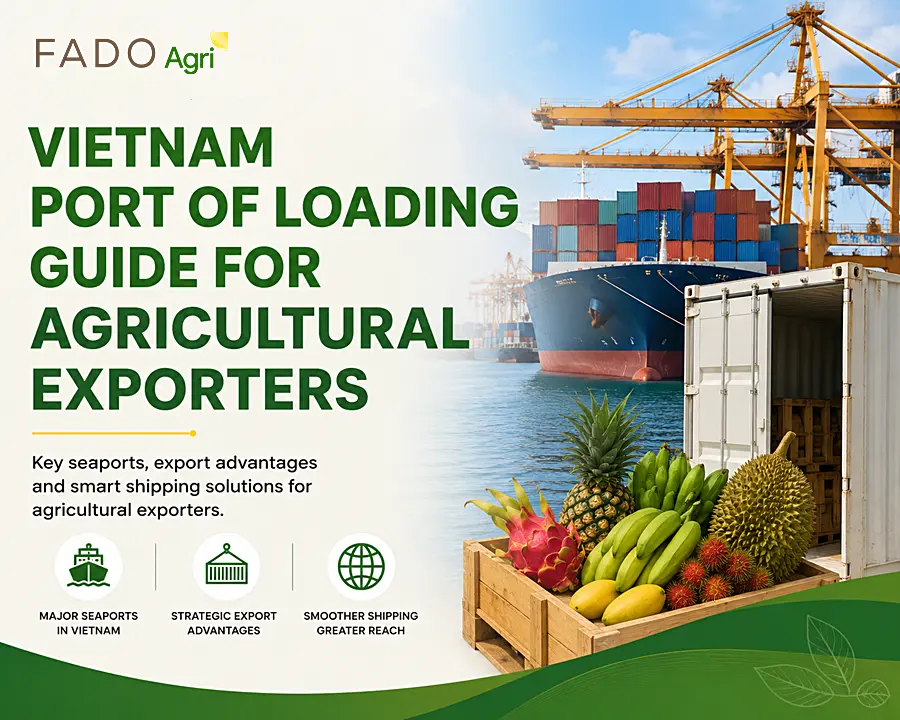
An Overview of Vietnam’s Agricultural Export Port Infrastructure
Vietnam’s primary export ports are concentrated in the south, which is a logistical advantage given that the Mekong Delta — the country’s dominant fresh fruit and coconut producing region — sits within relatively short trucking distance of Ho Chi Minh City. The two terminals that handle the vast majority of containerised agricultural exports are Cat Lai Port and Cai Mep International Terminal (CMIT), both in the southern region. Smaller volumes move through ports in the central and northern zones, primarily Da Nang and Hai Phong, though these are less relevant for Mekong Delta produce.
Southern Ports: The Gateway for Mekong Delta Produce
The southern cluster handles the dominant share of Vietnam’s fresh fruit and processed agricultural exports. Cat Lai in Ho Chi Minh City and Cai Mep in Ba Ria-Vung Tau province serve different but complementary roles in the export chain. Understanding which terminal suits your cargo type, vessel schedule, and destination market is essential before you confirm a booking with your freight forwarder.
Central and Northern Ports
Da Nang Port serves as the central region’s main container facility and handles some agricultural exports from the Central Highlands, including coffee and certain spices. Hai Phong Port in the north is the primary exit point for agricultural products originating from northern growing provinces. For exporters of Mekong Delta fruit and coconut products, however, neither Da Nang nor Hai Phong is a practical routing option — the overland distance and additional handling cost outweigh any benefits.
Cat Lai vs. Cai Mep: Key Differences for Agricultural Exporters
Cat Lai and Cai Mep are not interchangeable. Each has distinct strengths that make it more or less suitable depending on your cargo profile, destination, and required vessel type.
| Port / Terminal | Location | Proximity to Mekong Delta | Reefer Capacity (approx.) | Main Routes Served |
|---|---|---|---|---|
| Cat Lai Port | Ho Chi Minh City, District 2 | ~70–90 km to Ben Tre / Tien Giang | High — extensive reefer plug availability for regional feeders | Intra-Asia, feeder to Singapore/Port Klang, short-sea routes |
| Cai Mep International Terminal (CMIT) | Ba Ria-Vung Tau Province | ~100–130 km to Ben Tre / Tien Giang | Moderate-to-high — expanding reefer infrastructure for direct-call vessels | Direct deep-sea: USA, Europe, Middle East, Australia, Northeast Asia |
| Da Nang Port | Da Nang City, Central Vietnam | 700+ km | Limited reefer plug capacity | Short-sea North Asia, China, some feeder routes |
| Hai Phong Port | Hai Phong City, Northern Vietnam | 1,700+ km | Moderate — primarily for dry and chilled cargo from northern provinces | China, Northeast Asia, feeder to transshipment hubs |
Cat Lai: Volume, Frequency, and Feeder Connectivity
Cat Lai is Vietnam’s busiest container terminal by throughput and offers the highest sailing frequency for feeder vessels connecting to major transshipment hubs such as Singapore and Port Klang. For agricultural exporters shipping to markets in Southeast Asia, the Middle East via transshipment, or consolidating LCL cargo, Cat Lai’s schedule density is a major advantage. The port’s reefer plug network is well-developed for the volume of chilled and frozen cargo it handles. The main drawback is periodic congestion — Cat Lai handles an enormous share of Vietnam’s total container volume, which can cause gate delays and yard dwell times during peak export seasons.
Cai Mep: Deep-Sea Direct Calls and Faster Ocean Transit
Cai Mep has emerged as the preferred terminal for exporters targeting direct-call lanes to the US West Coast, Europe, Australia, and the Middle East. The terminal is capable of accommodating ultra-large container vessels (ULCVs), meaning fewer transshipment hops and shorter total transit times compared to feeder-based routing through Cat Lai. For temperature-sensitive fresh produce — including fresh coconut, dragon fruit, and seedless lime — every additional transshipment event is a cold chain risk. In our experience, direct-call routing from Cai Mep meaningfully reduces that risk for long-haul markets. Reefer plug infrastructure at Cai Mep has been expanding steadily, though booking reefer slots in advance remains important during seasonal peaks.
Transit Times: From Key Growing Regions to Port
Road transit from farm to port is a critical factor in cold chain planning. Produce that spends too long in an uncontrolled environment before reaching a reefer container or cold storage facility at the port loses shelf life that cannot be recovered. The table below reflects typical road conditions and distances — actual transit times vary based on traffic, weather, and seasonal road quality in the Mekong Delta.
| Growing Region | Key Produce | Closest Export Port | Approximate Road Distance | Typical Road Transit Time |
|---|---|---|---|---|
| Ben Tre Province | Fresh Coconut, Coconut By-products | Cat Lai (HCMC) | ~80 km | 2–3 hours |
| Tien Giang Province | Fresh Coconut, Dragon Fruit, Watermelon | Cat Lai (HCMC) | ~70 km | 1.5–2.5 hours |
| Long An / Tien Giang | Seedless Lime, Banana, Guava | Cat Lai (HCMC) | ~60–80 km | 1.5–2.5 hours |
| Binh Thuan Province | Red Dragon Fruit | Cat Lai (HCMC) | ~190 km | 4–5 hours |
| Mekong Delta (general) to Cai Mep | Fresh Produce, Processed Coconut | Cai Mep (Ba Ria-Vung Tau) | ~100–140 km from Ben Tre/Tien Giang | 2.5–4 hours |
For buyers requiring cold chain shipping from Vietnam, the farm-to-port transit window must be coordinated precisely with container stuffing schedules and vessel cut-off times. Delays in this first leg are a common source of quality complaints that are entirely preventable with proper planning.
CFS (Container Freight Station) Process at Vietnamese Ports
A Container Freight Station is a licensed facility — either at the port or in a nearby inland container depot — where LCL (less than container load) cargo from multiple exporters is consolidated into a single FCL container. At Cat Lai and Cai Mep, CFS facilities handle phytosanitary inspection, packing list verification, and fumigation where required. For fresh agricultural produce, CFS handling adds time and involves additional temperature exposure risk, which is why most volume shippers of fresh fruit prefer FCL shipments with product packed directly into a reefer container at a pre-cooling facility close to the farm or packing house. If you are evaluating LCL options for smaller shipment volumes, see our related guide on FCL vs. LCL shipping for Vietnam agricultural exports.
Phytosanitary Compliance at Port
Phytosanitary inspection by Vietnam’s Plant Protection Department (PPD) is mandatory for fresh fruit and vegetable exports and is typically arranged in advance through your export agent or logistics partner. The inspection can take place at a registered packing house before the cargo reaches the port, or at a designated inspection point at the port facility. Pre-port inspection at a certified packing house is the more time-efficient option and reduces the risk of vessel cut-off misses caused by inspection delays at the terminal. Fado Agri’s export operations are structured around pre-shipment inspection protocols aligned with FDA, GLOBALG.A.P, and HACCP requirements to ensure documentation is complete before cargo arrives at the terminal gate.
How Port Congestion Affects Agricultural Shipment Scheduling
Cat Lai in particular has faced recurring congestion during peak seasons, with gate queues and extended container yard dwell times reported during the Q4 holiday export surge (October–December) and the Lunar New Year period (January–February). Congestion at the terminal level translates directly into missed vessel cut-offs, which for a reefer shipment of fresh coconut or dragon fruit can mean the difference between a saleable and an unsaleable cargo upon arrival. Experienced exporters build buffer time into their cut-off calculations — typically adding 24–48 hours to standard cut-off deadlines during known peak periods. Working with a logistics partner who has real-time terminal visibility is not optional; it is a prerequisite for reliable fresh produce export.
Seasonal Export Peaks and Port Capacity
Vietnam’s agricultural export calendar creates two predictable peaks in port demand. The first is the post-Lunar New Year recovery period (February–April), when fruit supplies are high and buyers are restocking. The second is the pre-Christmas/year-end peak (October–December), when demand from Middle Eastern, European, and Australian markets rises sharply. During these windows, reefer plug availability tightens at both Cat Lai and Cai Mep, booking lead times extend, and freight rates typically increase. Exporters who lock in vessel space and reefer equipment allocations 4–6 weeks in advance consistently outperform those who book spot. For context, Fado Agri ships 500+ containers per year and manages forward booking schedules aligned with harvest calendars from Ben Tre and Tien Giang to ensure supply continuity for our buyers.
How Port Choice Affects Landed Cost to Key Markets
Port selection is not just a logistics question — it is a cost equation. Cat Lai feeder routing to a transshipment hub adds port handling charges at the hub and extends total ocean transit by 3–7 days depending on the destination. Cai Mep direct-call routing eliminates the transshipment cost but may involve a slightly higher base freight rate. For markets such as the UAE, Australia, Japan, and South Korea — all active markets for Vietnamese fresh produce — the cost differential between feeder-then-direct and pure direct routing can be meaningful at scale. The optimal choice depends on your contracted freight terms (FOB Vietnam or CIF destination), the sensitivity of your produce to transit time, and your buyer’s delivery schedule requirements. There is no universal answer; port selection should be evaluated shipment by shipment against current vessel schedules and freight quotations.
For a complete picture of how the full supply chain comes together from farm to your buyer’s facility, the article From Farm to Global Shelf covers the end-to-end journey including pre-cooling, documentation, and final-mile delivery.
Frequently Asked Questions
Which port in Vietnam is best for fresh coconut exports from Ben Tre?
Cat Lai Port in Ho Chi Minh City is the most commonly used exit point for fresh coconut from Ben Tre, given its approximately 80 km road distance and high sailing frequency. For direct deep-sea routes to markets such as the UAE, USA, or Australia, Cai Mep may offer a better option by eliminating transshipment stops, despite the slightly longer road transit from Ben Tre.
What is the difference between Cat Lai and Cai Mep for exporters?
Cat Lai handles the highest volume of feeder and regional container traffic in Vietnam and offers the most frequent sailing schedules for short-sea and transshipment-based routing. Cai Mep is capable of receiving ultra-large container vessels on direct-call deep-sea services, making it preferable for exporters targeting the US, Europe, Middle East, and Australia without transshipment handling.
Does Vietnam have cold storage facilities at port?
Yes — both Cat Lai and Cai Mep have CFS facilities and associated cold storage options, and reefer plug infrastructure exists at both terminals. Reefer plug capacity can tighten during seasonal peaks, so advance booking of equipment and terminal slots is strongly recommended for fresh produce shipments.
What is the CFS process for agricultural exports at Vietnamese ports?
At a Container Freight Station, LCL cargo from multiple exporters is received, inspected, and consolidated into a single FCL container. For fresh produce, this process adds handling time and temperature exposure risk. Most commercial-scale fresh fruit exporters use FCL shipments with product stuffed into reefer containers at a certified packing house near the farm to minimise these risks.
How does port congestion affect fresh produce export schedules?
Congestion at Cat Lai and Cai Mep during peak season can cause gate delays, extended yard dwell, and missed vessel cut-offs. For temperature-sensitive cargo, a missed vessel cut-off means a full week’s delay on the next available sailing, with significant implications for product shelf life and buyer satisfaction. Building 24–48 hours of buffer into cut-off planning and working with logistics partners who have terminal visibility is the standard mitigation approach.
Are there ports in northern or central Vietnam for agricultural export?
Hai Phong Port serves northern Vietnam and handles agricultural exports from northern growing provinces. Da Nang Port serves the central region. Neither is a practical export point for Mekong Delta produce such as fresh coconut, dragon fruit, or tropical fruit, given the prohibitive overland distances involved.
What is FOB Vietnam and how does port selection relate to it?
FOB (Free On Board) Vietnam means the exporter’s responsibility ends when the cargo is loaded onto the vessel at the named port of loading. Your port of loading must be specified in the sales contract. Choosing Cat Lai vs. Cai Mep as your named FOB port affects the vessel schedules available to your buyer’s nominated freight forwarder and the ocean transit time they can plan against.
How far in advance should reefer container slots be booked at Vietnamese ports?
During standard periods, 2–3 weeks advance booking is generally sufficient. During seasonal peaks — particularly October through December and February through April — booking 4–6 weeks in advance is advisable to secure reefer equipment availability and preferred vessel departure windows. Last-minute reefer bookings during peak season frequently result in equipment shortages or elevated spot rates.
Plan Your Port Strategy Before Your Next Shipment
Getting port selection right is not a one-time decision — it is an ongoing operational discipline that should be revisited with every new season, new destination market, and new vessel schedule publication. If you are sourcing fresh produce or processed coconut products from Vietnam and want to understand how port routing integrates with the full export process, our team at Fado Agri is available to walk through the specifics for your target markets and volume profile. We have been managing FOB Vietnam exports across Cat Lai and Cai Mep since 2016 and can provide practical guidance grounded in real shipment experience — not theory.