
For importers, a dependable tropical-fruit Cold Chain depends on how each stage is planned and connected, from harvest and post-harvest handling to packing, reefer transport, and delivery. The right controls vary by fruit, shipment, and destination, so buyers should assess the complete handling plan and the evidence linked to the offered lot rather than rely on a generic promise of freshness. This guide sets out questions procurement teams can use to review a proposed plan before confirming an order.
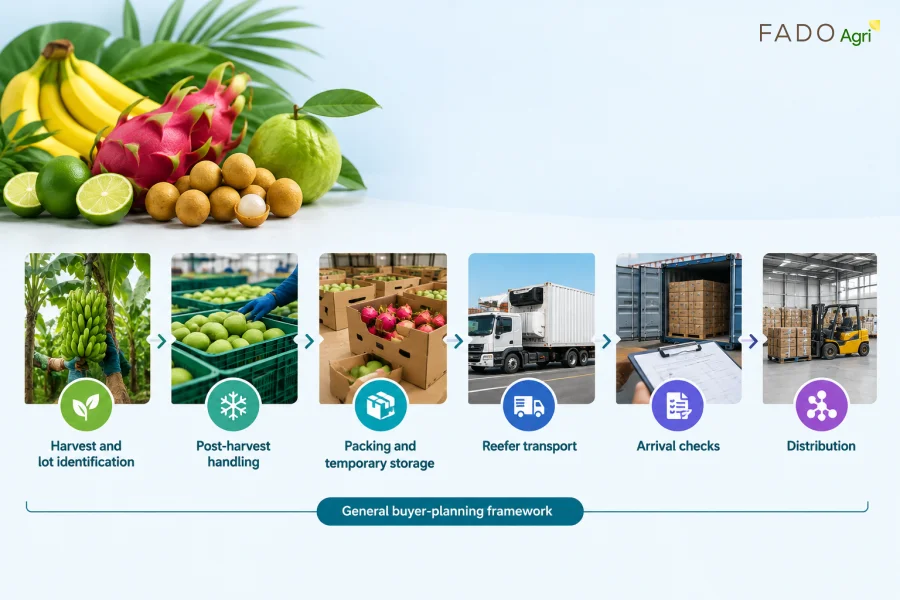
What a farm-to-fork Cold Chain means for tropical-fruit buyers
A farm-to-fork Cold Chain is the coordinated handling and transport plan for a perishable product as it moves through successive supply stages. For buyers, the important question is whether those stages connect into a clear, product-specific plan—not simply whether a supplier uses the term “cold chain.” The plan should identify responsibilities, relevant records, and how the shipment will be assessed.
Why one specification cannot cover every tropical fruit
A plan for Cavendish Banana may not be interchangeable with one for Seedless Lime, Dragon Fruit, Guava, or Longan. Product condition, intended use, buyer specifications, packaging, route, and destination requirements all affect what needs to be agreed. Ask the supplier to provide requirements for the particular fruit and order; do not assume a general specification applies across a mixed tropical-fruit portfolio.
Refrigerated transport is only one part of the plan
A reefer container is a transport component, not a complete description of how a lot is handled from origin to delivery. Buyers should also understand what happens before loading, who manages each handoff, what records are available, and how arrival checks will be handled. The aim is to agree on a process and supporting evidence—not to assume a particular outcome based on the equipment name alone.
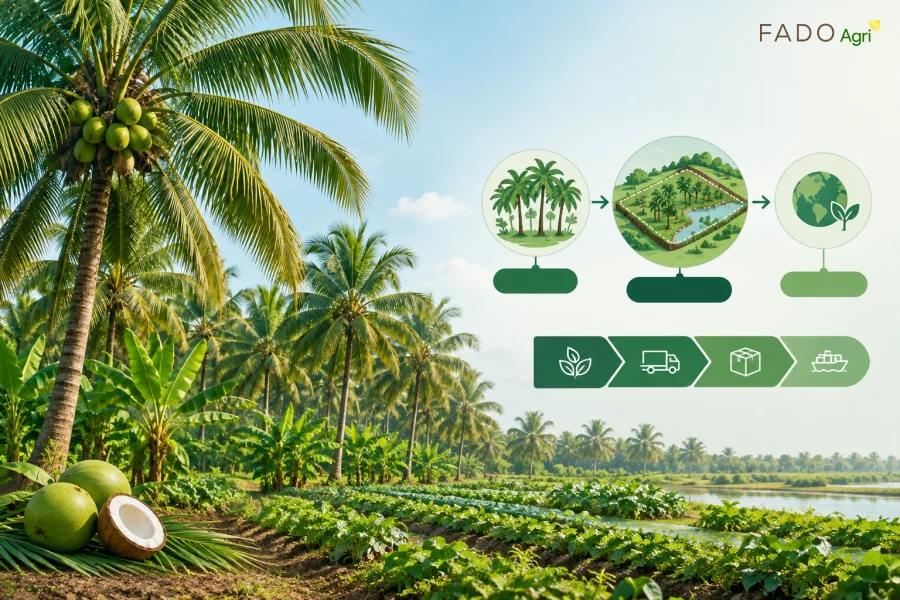
Map the journey from harvest to export-ready shipment
The condition of a shipment can be affected before it enters a reefer container. Mapping the handoffs helps procurement teams see where product identity, responsibilities, checks, and communication need to be agreed before an order is confirmed. It also helps buyers compare suppliers on the completeness of their plans rather than on broad assurances.
| Stage | What the buyer should clarify |
|---|---|
| Harvest and lot identification | How the product and lot are identified, and what information links them to the order |
| Post-harvest handling | Which party is responsible and which product-specific requirements apply |
| Packing and temporary storage | What specifications have been agreed and what checks or records are available |
| Loading and transport handoff | Who coordinates the handoff and which shipment documents are provided |
| Arrival and onward distribution | How condition, discrepancies, and acceptance are assessed and communicated |
At each handoff, ask who is responsible, what information is recorded, and how exceptions are reported. These details help prevent gaps between the supplier, logistics partners, importer, and downstream distributor. Keep the product and lot identity connected to the relevant shipment records so that documents can be matched to the order under review.
The fruit names in a supplier’s catalogue establish the products offered, not the handling procedure for each one. For any listed product—whether Cavendish Banana, Seedless Lime, Dragon Fruit, Guava, or Longan—request a plan that is specific to its form, order, and destination.
Agree product-specific post-harvest and packing requirements
Post-harvest handling and packing should be assessed against the product and the buyer’s requirements. A useful discussion turns general expectations such as “export quality” into specifications that both parties can understand and relate to the offered lot. Ask for the applicable documents and checks rather than inferring technical details from a broad process description.
Turn buyer expectations into a product specification
Before comparing offers, define the product form, intended use, quality criteria, packaging expectations, and any handling requirements that matter to the order. Then ask the supplier to confirm which of those requirements its offer addresses. Post-harvest technology and packing decisions should be considered in that product-specific context; they should not be assumed to be identical across tropical fruits.
Ask how checks and exceptions are documented
Clarify which checks are performed, at what stage, how the results are recorded, and what happens if a lot does not meet an agreed criterion. Request evidence that relates to the product or shipment being offered. A supplier’s description of its usual process is useful context, but it is not the same as records demonstrating what applies to a particular order.
Avoid filling gaps with assumptions about treatments, packaging materials, or technical limits. If a requirement is essential to your purchase, put it in the order specifications and ask the supplier to confirm how it will be addressed and documented.
Plan reefer transport and destination requirements together
Transport planning and destination-market requirements should be addressed before the cargo is in transit. A reefer container is part of the proposed arrangement, while the buyer also needs clarity on responsibilities, shipment milestones, document sharing, and the requirements that apply to the exact product and market. Confirm these points with the supplier and the appropriate sources for the destination.
Questions to ask about the reefer shipment plan
Ask who is responsible for coordinating the transport leg, what shipment milestones will be communicated, and which relevant records will be shared. Discuss how the proposed route and onward handling fit the order, without assuming a transit time or a particular monitoring method unless it has been specified and supported. The presence of refrigerated equipment alone does not establish what conditions were maintained at every point in the journey.
Verify requirements for the exact product and destination
Confirm the current import conditions for the specific fruit and destination market, including applicable SPS/TBT standards, MRLs compliance, and any required phytosanitary documentation. Requirements can depend on the product and destination, so buyers should use appropriate current sources and shipment-specific advice rather than rely on a general statement. A Phytosanitary certificate or other document should be checked for relevance to the product and shipment in question.
Do not treat a general mention of GlobalGAP or another certification as proof that a supplier, facility, farm, or specific lot holds a current certificate. If certification is part of your procurement criteria, ask for documentation and confirm its scope and validity for the relevant supply.
Assess shipment evidence, traceability, and arrival checks
Evidence is most useful when it relates to the order being evaluated. Agree in advance which records the supplier will provide and how the buyer will assess the shipment on arrival. This makes supplier comparisons more meaningful and gives both sides a shared basis for handling discrepancies.
Build an evidence file that matches the order
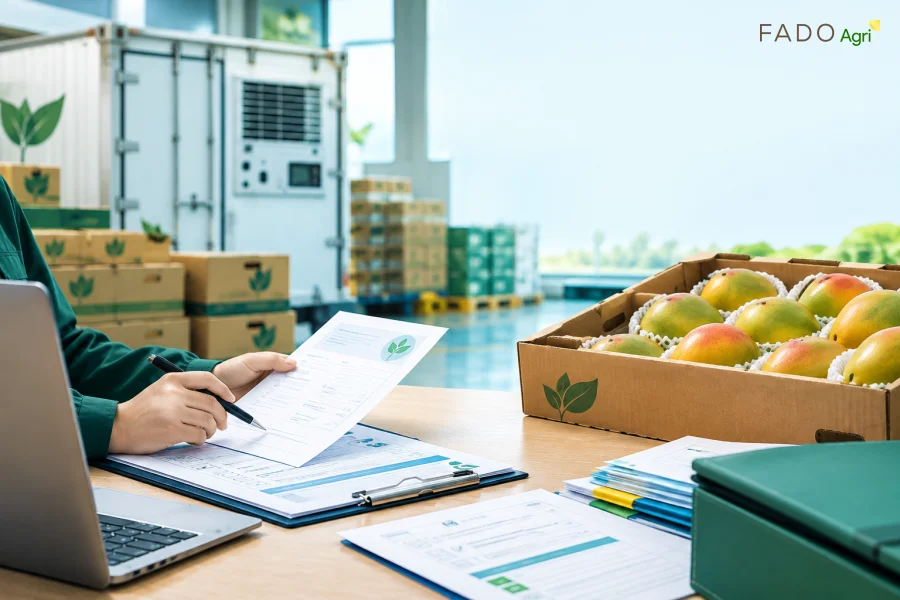
Depending on the requirements of the purchase and destination, ask for relevant product and lot identification, the agreed product specifications, applicable handling records, shipment documents, and destination-market documentation. Check that the records relate to the offered product and shipment rather than relying on a generic company profile or an unrelated example.
Connect claims about quality, traceability, or sustainability to evidence supporting that precise claim. For example, a statement about a supplier’s general approach does not by itself establish which records are available for a particular lot. Likewise, a certificate should be reviewed for its scope and relevance instead of being treated as a blanket assurance.
Agree how the shipment will be assessed on arrival
Before shipment, define the arrival inspection criteria, how any discrepancies will be recorded, and who should be contacted if concerns arise. Make sure the process is practical for the importer and consistent with the purchase agreement. Clear expectations are especially important when several organizations are responsible for different parts of the journey.
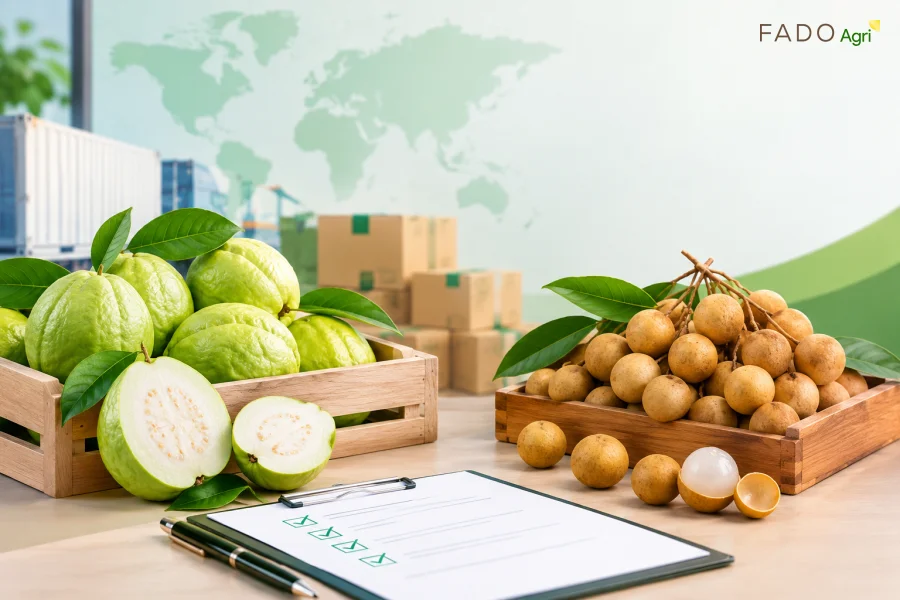
A buyer’s comparison checklist can include:
- Is the fruit and product form clearly identified?
- Can the offered lot be connected to the relevant order and documents?
- Are handling responsibilities and handoffs clear?
- Has the proposed reefer and route plan been explained?
- Are applicable destination documents identified and available for review?
- Are arrival acceptance criteria and discrepancy procedures agreed?
Compare suppliers by the completeness of the plan
A supplier comparison should focus on whether the proposed process answers the buyer’s operational questions, not on broad claims of freshness or reliability. A structured review can reveal missing information while there is still time to resolve it. It also helps separate a stated capability from a commitment confirmed for a particular shipment.
Pre-order review checklist for importers
Before approving an offer or scheduling a shipment, review the following:
- Product fit: Are the fruit, form, quality criteria, and packaging expectations specified for this order?
- Traceability: Is there a clear way to connect the lot identity with the shipment information?
- Responsibilities: Are the parties responsible for handling, transport coordination, documentation, and communication identified?
- Route planning: Has the proposed transport arrangement and the sharing of relevant shipment records been explained?
- Destination compliance: Have applicable SPS/TBT requirements, MRLs compliance, and phytosanitary documents been checked for the exact product and destination?
- Arrival process: Are the inspection criteria, discrepancy records, and escalation contacts agreed?
Record unanswered questions and resolve them before confirming the shipment. If a supplier cannot yet provide a detail, ask when it can be confirmed and whether the open point affects product suitability, documentation, or the delivery plan. Avoid comparing offers as though a missing detail were equivalent to a confirmed requirement.
Discuss a tropical-fruit sourcing plan with FADOAgri
A useful sourcing discussion starts with the buyer’s product, destination, order requirements, and shipping context. FADOAgri states that it operates a farm-to-container Cold Chain; buyers should request the specifications, applicable documents, and proposed plan relevant to the particular product and shipment. This allows procurement teams to assess the offer against their own requirements without assuming that every fruit or route follows the same process.
When making an inquiry, include the fruit and product form, destination market, buyer specifications, expected order timing, and documentation needs. You can contact FADOAgri’s export team by email at [email protected] or by WhatsApp/hotline at (+84) 908 479 339. Ask for the information needed to evaluate your order, including product specifications and route-specific details where applicable.
Phone: 0908 479 339 · Website: FADOAGRI · Contact us