
An orchard’s use of organic-oriented practices does not, by itself, establish that its fruit is certified organic for a particular market. A sound transition to organic tropical fruit farming starts by identifying the intended destination and certification pathway, then aligning orchard management, recordkeeping, harvest handling, and buyer documentation with that pathway. The exact requirements depend on the applicable rules, country, crop, operation, and certifier, so a general checklist cannot guarantee certification.

What transitioning a tropical fruit orchard to organic certification involves
Transitioning means bringing production and handling practices into line with a defined certification pathway and maintaining evidence that supports the scope of the certification. For an export orchard, this is both a farm-management process and a documentation process: buyers need to understand what is certified and how the offered fruit is connected to that claim.
Organic practices are not the same as certified status
An operator may adopt practices associated with organic production, but the term “certified organic” refers to a claim supported under an applicable certification system. A buyer should therefore distinguish a description of farming methods from evidence that covers the relevant operation, product, and intended market. The exact claims an operator may make depend on the applicable rules and the status and scope of its certification.
This distinction matters for tropical fruit such as Cavendish Banana, Seedless Lime, Dragon Fruit, Guava, and Longan. The crop name alone does not establish a product’s certification status. Nor does a general statement about an orchard’s practices show that a specific harvest lot falls within a relevant certification scope.
Why the target market shapes the transition plan
Before changing inputs or making product claims, an orchard operator should identify where the fruit is intended to be sold and which certification pathway applies. Requirements may depend on the destination, production location, crop, operator, and current rules. Importers also need evidence that relates to their particular sourcing decision rather than a broad, unqualified assurance.
For buyers, the practical question is not simply, “Is the farm organic?” It is whether the available evidence covers the fruit, operation, and market relevant to the proposed order. Keep this question separate from other export considerations, such as Cold Chain logistics or phytosanitary requirements.
Choose the USDA or EU pathway before changing orchard practices
USDA and EU certification should be treated as distinct pathways, not interchangeable labels. Choosing the intended market and defining the proposed claim early gives the orchard operator and buyer a clearer basis for checking current requirements and avoiding assumptions about practices, recognition, or paperwork.
Define the certification scope and destination
Start by identifying the production site, crop, operator, and intended sales market. An orchard supplying several crops or operating across multiple sites should not assume that evidence relating to one crop or site automatically covers another. The relevant scope should be confirmed with the appropriate certifier and checked against current official requirements for the intended market.
An operator should also clarify what claim is intended for the product and how that claim will be supported. Buyers can use the same information to determine whether the certification evidence they receive is relevant to the supplier and fruit they are considering. Avoid relying solely on a verbal description or a document that does not clearly relate to the offer.
Treat USDA and EU requirements as distinct until confirmed
The fact that both pathways concern organic production does not establish that their requirements, procedures, or recognition arrangements are identical. Conditions such as conversion rules, input eligibility, inspection processes, records, and labeling may depend on the specific pathway and circumstances. These details should be checked with the applicable official sources and certifier rather than inferred from a general guide.
For procurement teams, this means asking which pathway applies and whether the evidence is appropriate for the intended destination. Do not assume that a certificate or claim associated with one system automatically satisfies the other. Where a supplier serves several markets, assess the evidence for each relevant product-market combination.
Build an orchard transition plan around site history and farm records
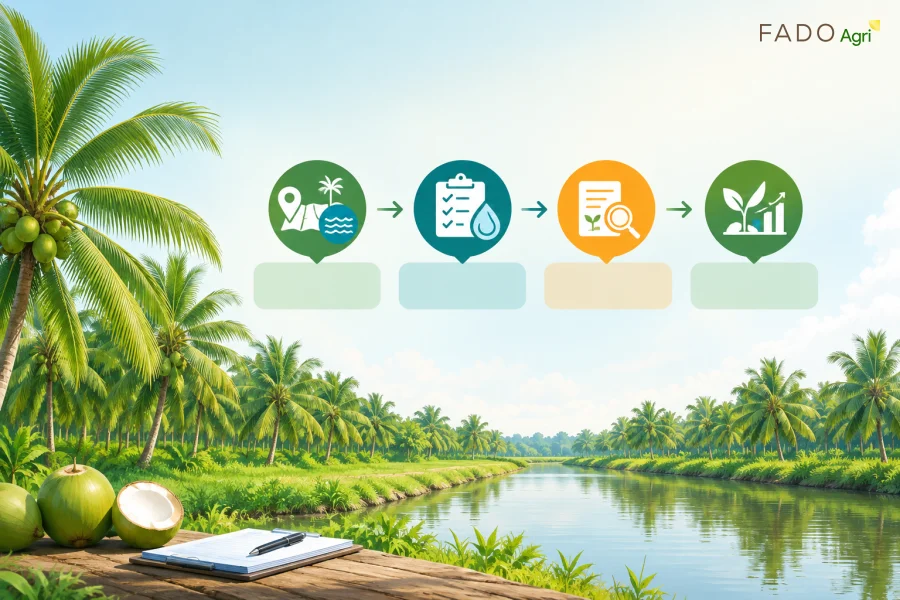
A transition plan should begin with the orchard’s actual production history, current practices, and available records. Reviewing these elements helps the operator identify what needs to change and gives the certifier a clearer basis for assessing the operation against the applicable pathway.
Establish a baseline before making changes
Create an organized picture of the orchard, including relevant site or block identification, crops, planting information, production activities, and records of past practices. The level of detail required should be confirmed for the applicable scope; this is a planning approach, not a universal technical prescription. Clear site identification can also help prevent records for different blocks or crops from being mixed together.
Review the information with the certifier before making assumptions about the transition. A past input, a change in ownership or management, or an incomplete production record may affect what questions need to be resolved. The appropriate response depends on the facts of the site and the applicable requirements.
Plan production practices and records together
Decisions about soil fertility, pest and disease management, and other orchard activities should be aligned with the relevant standard and certifier guidance. There is no single input or production recipe that can be presented here as suitable for every tropical fruit orchard or certification pathway. Operators should confirm whether a proposed practice or material is acceptable before relying on it in a certification plan.
Records make those decisions reviewable. Depending on the applicable requirements, an operator may need to organize information about purchases and use of materials, field activities, harvests, sales, and exceptions. Keep records dated and connected to the relevant site, crop, or lot where appropriate. Good records are not a substitute for certification, but gaps can make it harder to demonstrate how the operation was managed.
Assess site-specific contamination and separation risks
Nearby land use, possible drift, shared equipment, and other routes of unintended contact are matters to assess for the specific orchard. Their relevance and the suitable controls depend on the site and applicable requirements. Operators should raise these issues with the certifier rather than assume that every orchard faces the same risks or needs the same measures.
Documenting the assessment and decisions can help the operator explain how risks are being managed. It can also give buyers a more useful account of production controls than a general claim about the farm’s intentions.
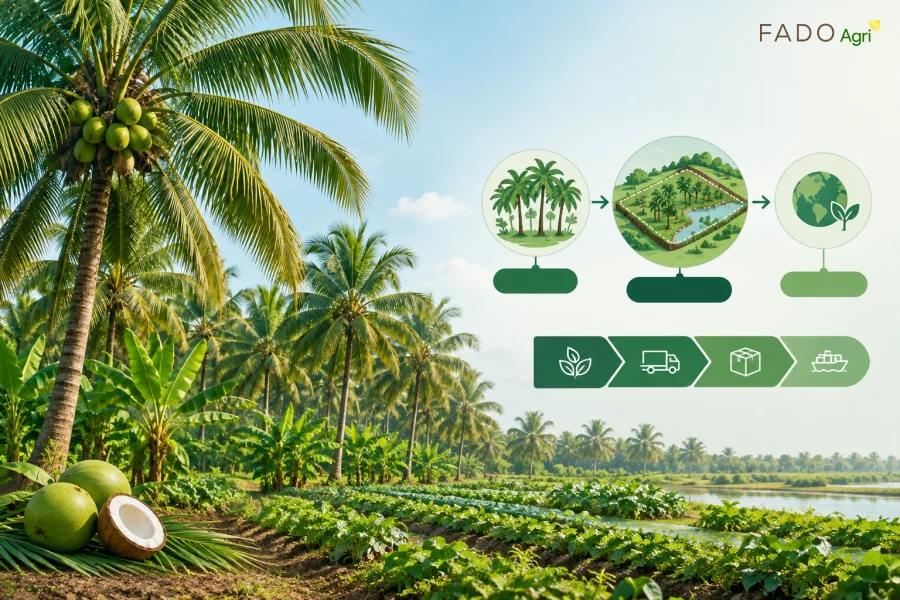
Maintain product identity from harvest through export handling
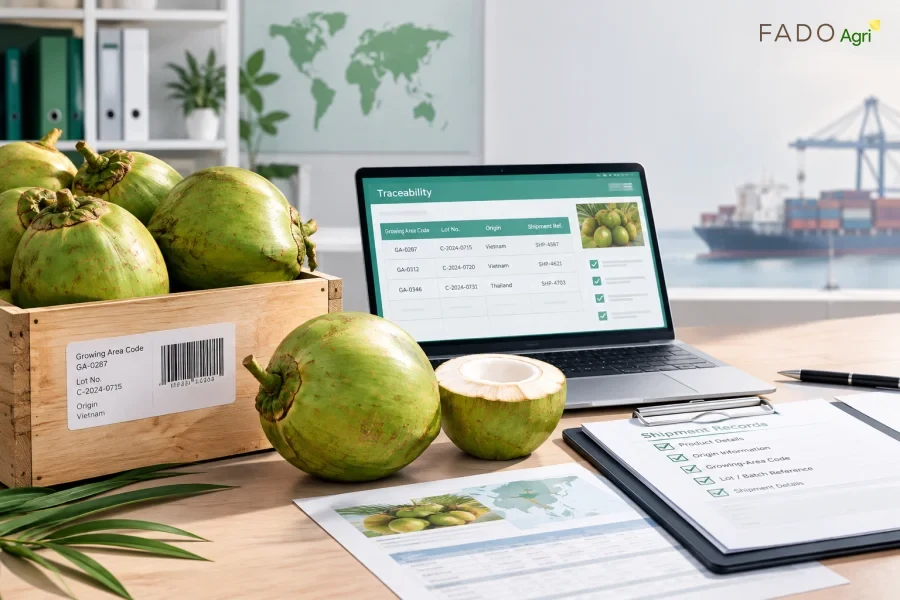
Orchard records support a buyer’s review only when the fruit offered can be connected to the relevant production information. Harvest, packing, storage, and shipment arrangements therefore need to preserve product identity in a way that fits the applicable certification and handling requirements.
Link orchard records to harvest lots
Use a practical traceability approach that connects the relevant orchard or production records to harvest lots and the fruit offered for sale. The specific identification method and records required should be confirmed for the certification pathway, facility, product, and market. The purpose is to make it possible for the operator and buyer to follow the relationship between production and the offered lot.
Before a shipment is planned, the supplier and buyer can agree what information is needed to identify the product and lot. Avoid assuming that one record format or shipment-document set applies in every case; requirements and commercial arrangements can differ.
Confirm packing and handling controls for the applicable pathway
Packing and handling controls should be reviewed with the certifier and relevant facility operators. If fruit is handled alongside other products, ask how product identity and any required separation are maintained. Do not rely on an unverified list of practices or assume that one facility arrangement meets every certification pathway.
Organic certification evidence is also distinct from general product-quality records, Cold Chain logistics information, and phytosanitary documentation. These materials may be relevant to different buyer or regulatory questions, but they should not be presented as substitutes for one another. Similarly, MRLs compliance alone does not establish organic certification.
How importers can assess an organic tropical-fruit supplier
Importers should assess an organic claim together with evidence that relates to the specific supplier, product, and intended market. A focused review helps procurement teams identify what is established, what remains unclear, and which details should be confirmed before placing or receiving an order.
Check certification scope against the product and destination
Ask for the supplier’s relevant certification evidence and clarify the operation, crop or product, and market it covers. Confirm its status and relevance through appropriate parties rather than relying only on a sales description. If the offer involves multiple products, sites, or destinations, check whether the evidence applies to each one instead of assuming broad coverage.
The following questions can structure an initial review. They are prompts for discussion, not a substitute for the requirements of the applicable certification system:
- Which certification pathway and intended market does the supplier’s claim refer to?
- Does the available evidence relate to the supplier, production operation, and fruit in the offer?
- How are orchard records connected to the harvested lot and product being quoted?
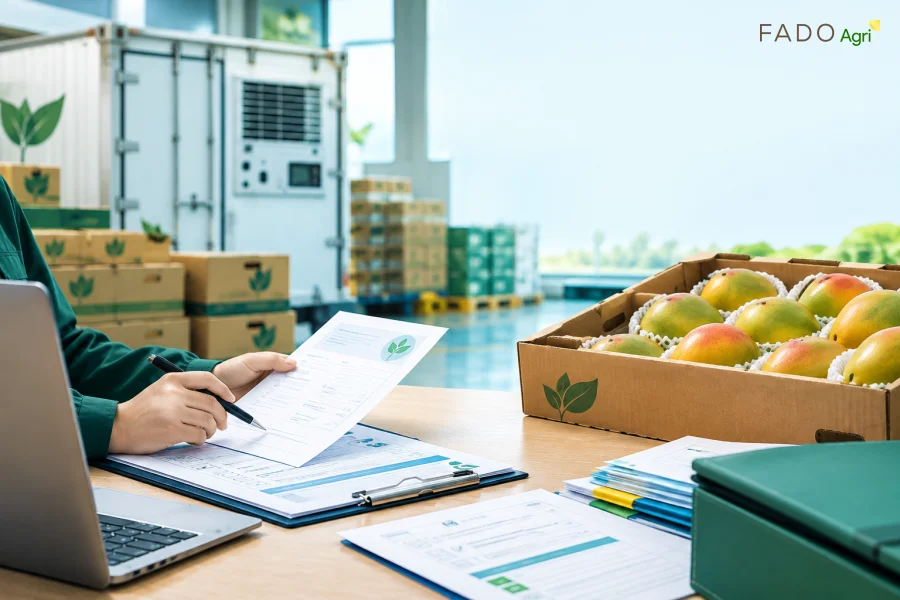
- Which packing, handling, and shipment records are available for this specific offer?
- Who can clarify any gaps or scope questions before the order proceeds?
Keep organic evidence separate from other compliance documents
GlobalGAP, SPS/TBT considerations, phytosanitary documentation, and MRLs compliance may address other buyer, quality, or regulatory considerations. They should not be treated as proof of organic certification. Procurement teams should identify what each document or assurance actually demonstrates and avoid combining distinct claims into a single conclusion.
This distinction can make supplier discussions more precise. Instead of asking for a general “compliance package,” specify the product and market, then ask what evidence is available for the organic claim and what separate documentation supports other shipment or market requirements.
Frequently asked questions
These answers address common planning and sourcing questions without assuming that the same conditions apply to every orchard or market. For decisions about a particular operation, product, or claim, confirm the applicable requirements with the relevant official sources and certifier.
Is an orchard organic once it stops using conventional inputs?
Not necessarily. Changing practices does not by itself establish certified organic status. The applicable pathway, production history, required process, and evidence need to be assessed for the specific operation and intended market.
Are USDA and EU organic certification interchangeable?
Do not assume they are. Treat them as distinct pathways and confirm whether the evidence available applies to the product and destination in question. Any recognition or equivalence arrangement should be verified for the specific circumstances.
How long does it take for a tropical fruit orchard to become certified organic?
There is no single timeline that can be stated for every orchard. The applicable conditions may depend on the certification pathway, production history, crop, location, and certifier. Ask the certifier to assess the specific operation before planning a conversion schedule.
What should an importer request when evaluating an organic fruit offer?
Ask for evidence relevant to the supplier, product, production operation, and intended market, then clarify how orchard records connect to the offered harvest lot. Request separate information for other requirements, such as phytosanitary documentation or shipment handling, rather than treating it as proof of organic certification.
Discuss an organic tropical-fruit sourcing requirement with FADOAgri
A useful sourcing inquiry identifies the fruit, destination market, and documentation questions the buyer needs to resolve. FADOAgri invites procurement partners to request product specifications and ask what certification and shipment documentation is available for the specific product and market; availability and certification status should be confirmed for each offer.
Contact the FADOAgri export sales team by WhatsApp or phone at (+84) 908 479 339, or email [email protected] to discuss your sourcing requirements.
Phone: 0908 479 339 · Website: FADOAGRI · Contact us