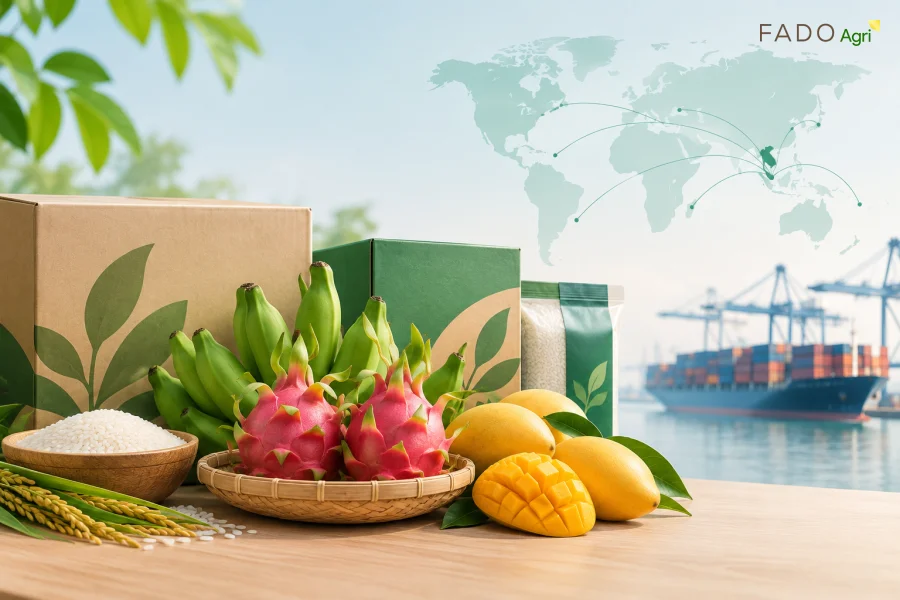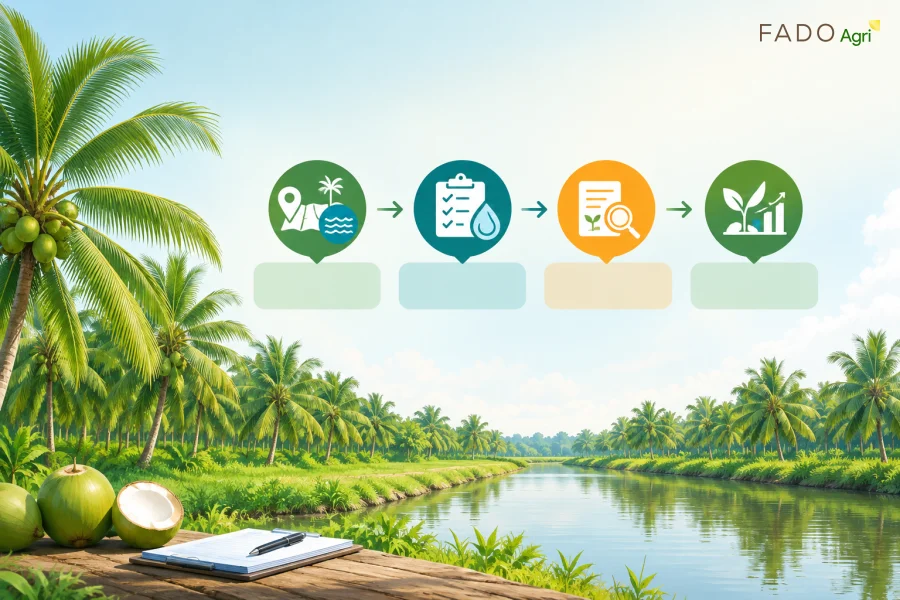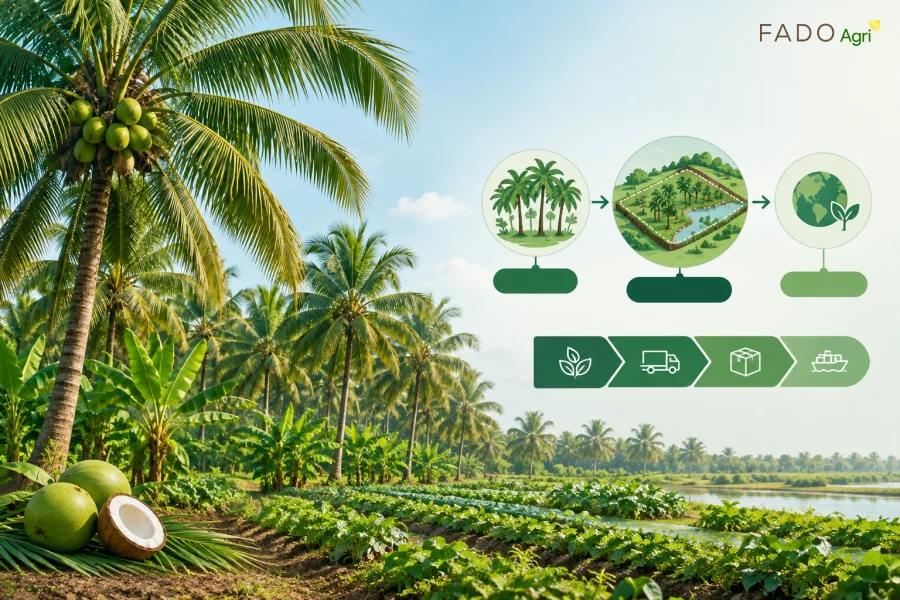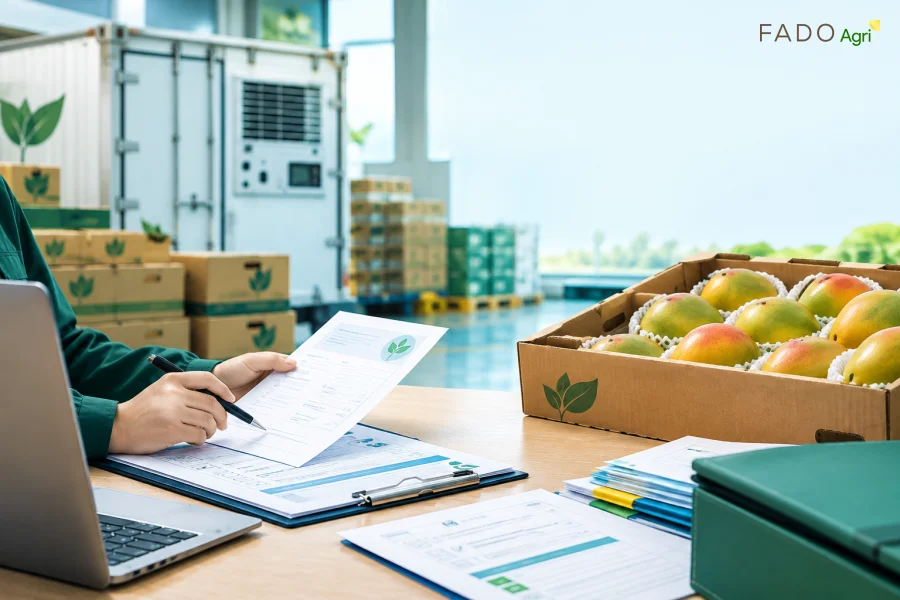

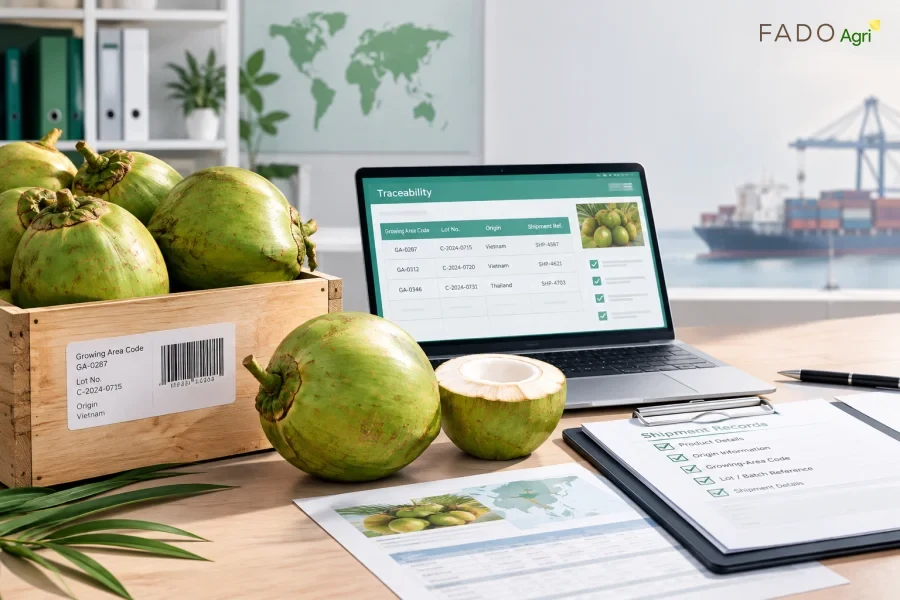
Importing Vietnamese fresh coconuts through the Netherlands starts with three buyer decisions: which product presentation you need, where it will ultimately be sold, and how it will move from entry to customer. The Netherlands may be one route to assess for Dutch sales or onward distribution, but it is not automatically the right base or a guarantee of market access. Buyers should confirm the requirements for the exact product and destination, then compare the route with their commercial and handling needs.
FADO AGRI is a Vietnamese agricultural exporter with fresh coconuts as a core product category. International buyers can use the steps below to prepare a focused sourcing inquiry without assuming a particular coconut specification, Netherlands approval, or distribution arrangement.
Why buyers may evaluate the Netherlands as a base for European coconut distribution
A Netherlands-based plan can mean two different things: importing coconuts for customers in the Netherlands, or bringing them into the country as part of a wider distribution plan. Those plans may involve different customers, onward destinations, and responsibilities. Decide which one you are evaluating before comparing suppliers or arranging a shipment.
Treat the Netherlands as a route option to assess, not as proof of easier entry, lower costs, or better logistics. Market access, customs treatment, and commercial suitability are separate questions. Each needs to be established for the specific product and transaction.
Direct-to-market imports versus onward distribution
For Dutch sales, the buyer’s central question is whether the product, transaction, and planned delivery meet the needs of the intended Dutch customers and applicable requirements. For onward distribution, the buyer must also identify each final destination and confirm the conditions relevant to that movement and sale. An import plan should not assume that entry into one country settles requirements for another.
The intended customer channel matters as well. A wholesaler supplying retailers may have different product and delivery expectations from a foodservice distributor or another commercial buyer. Define the channel and customer requirements early so that the supplier inquiry and route assessment address the same commercial brief.
Define the coconut offer before requesting an import quotation
A quotation is meaningful only when the supplier and buyer are discussing the same product and commercial requirements. “Fresh coconuts” alone does not specify a particular variety, grade, size, or presentation. Buyers should describe what they are seeking and ask the supplier to confirm the details of the product actually offered.
This is especially important when comparing proposals. Do not treat an unspecified category description as confirmation of a particular product attribute, package, or shipment configuration. Keep confirmed offer details separate from preferences that still need agreement.
Build a buyer brief that suppliers can answer
Before requesting a quote, prepare a short brief covering:
- The intended market: the Netherlands, another named destination, or both.
- The distribution plan: direct delivery to customers or onward distribution from an intermediate point.
- The customer channel and any product requirements supplied by that customer.
- The coconut type or presentation requested, if already specified by the buyer.
- Packaging preferences and any requirements that need supplier confirmation.
- The shipment and quotation details the buyer needs to evaluate the offer.
Ask the supplier to identify the product specifications and packaging options that apply to the specific offer. If a requirement is still under discussion, label it as a preference or question rather than presenting it as an agreed specification.
Keep product specifications distinct from destination requirements
Product details describe what the supplier is offering; destination requirements concern what is needed for the intended transaction and market. Buyers should track these as separate parts of the inquiry. That makes it easier to identify which facts come from the supplier and which need confirmation from the importer’s customs or compliance partner, relevant authorities, or logistics provider.
Verify requirements for the Netherlands and the final destination
Before dispatch, confirm the current requirements that apply to the exact coconut product and intended transaction. A route through the Netherlands does not, by itself, establish that a product can enter the country or be redistributed to another market. Requirements may depend on product details and the destination, so buyers should not rely on a generic checklist for fresh produce.
Work with the appropriate authorities and the importer’s customs or compliance professionals to establish what applies. Avoid treating a supplier’s general product description as confirmation of destination eligibility, customs treatment, or documentation requirements.
Check the entry route and final destination separately
If the coconuts are intended for Dutch customers, confirm the applicable conditions for that planned import and sale. If they are intended to move onward, confirm the relevant requirements for the final destination as well as the proposed route. The buyer should establish which checks apply to each part of the plan rather than assuming that a single entry decision covers every market.
This distinction is useful when comparing routes. A plan that appears workable for one destination may not answer the questions for another. Record the intended markets before asking a broker or compliance partner to assess the transaction.
Assign document responsibilities before shipment
Agree who will obtain, check, and submit each document or piece of shipment information required for the transaction. Depending on the agreed arrangement, responsibilities may involve the importer, exporter, broker, and logistics partners. Put the division of work in writing so that important tasks are not left implicit.
The specific documents and procedures must be confirmed for the product and destination. Do not assume that a particular certificate, approval, tariff classification, duty rate, or Netherlands procedure applies without shipment-specific confirmation.
Plan handling and distribution around the confirmed product specification
A distribution plan includes more than the journey to an entry point. Buyers should understand how the product will be received, handled, and transferred to the next party, then check that those arrangements match the supplier’s guidance for the specific coconut presentation. The planned journey and handoffs should be discussed with the logistics partners involved.
Coordinate the shipment handoffs
Map the intended sequence from supplier to importer, any storage or distribution point, and the final customer. For each handoff, identify who receives the cargo, who is responsible for coordinating the next step, and what information or arrangements need to be in place. Ask the relevant partners for shipment-specific route, timing, and cost information; do not infer these details from the choice of country alone.
Before loading, align the agreed packaging and cargo-handling arrangements with the supplier and logistics provider. Also confirm what the receiving party needs to know in advance. Clear handoffs help buyers evaluate the whole plan rather than focusing only on the first leg.
Match onward distribution to product-specific guidance
Request handling and storage guidance for the product being quoted, then compare it with the importer’s facilities and the planned distribution route. Do not apply general figures from another coconut product or presentation. If the onward journey introduces extra handling or storage, discuss whether those arrangements fit the confirmed product guidance with the relevant supplier and logistics partners.
This planning does not establish a guaranteed shelf life or arrival condition. It gives buyers a practical basis for checking whether the proposed commercial route and receiving arrangements are compatible with the product offer.
Compare the Netherlands route with commercial alternatives
The value of an intermediate distribution point depends on the buyer’s actual customers, route, and responsibilities. Compare a Netherlands-based plan with direct shipment to a final market when that alternative is relevant and feasible. The goal is not to assume one route is better, but to identify what information is needed to make a sound comparison.
| Decision factor | Questions to resolve |
|---|---|
| Destination and customer | Where will the coconuts be sold, and which buyer or channel will receive them? |
| Route structure | Is the plan for Dutch sales, onward distribution, or both? What handoffs are involved? |
| Requirements | What conditions apply to the exact product, entry plan, and final destination? |
| Handling | Do the proposed receiving and onward arrangements match product-specific guidance? |
| Commercial inputs | What route-specific costs, timing, and responsibilities have logistics and customs partners confirmed? |
Use confirmed inputs in the comparison. Ask logistics and customs partners for information tied to the proposed shipment rather than relying on general assumptions about the Netherlands, a port, or a route. Include the number of handoffs, coordination responsibilities, and the location of customers when assessing whether a distribution plan fits your business.
Prepare a supplier inquiry for Vietnamese fresh coconuts
A focused inquiry helps the supplier respond to the product and commercial questions that matter to the buyer. It also makes clear which issues require a separate response from a broker, authority, or logistics provider. Keep the request concise, but include enough detail to distinguish your intended shipment from a general product inquiry.
A concise inquiry checklist for importers
Include the following in your message:
- Intended destination and whether the Netherlands is the final market or part of an onward-distribution plan.
- Requested coconut type or presentation and the customer channel you are serving.
- Product specifications and packaging details you want the supplier to confirm.
- Buyer-specific requirements that are preferences, pending approval, or confirmed conditions.
- Shipment information and quotation details needed for your route assessment.
- Questions about which product and shipment details the supplier can provide for the offer.
FADO AGRI supplies agricultural products from Vietnam, with fresh coconuts as a core product category. Buyers can contact FADO AGRI to discuss their sourcing requirements and request product specifications, packaging details, and an export quotation. Any destination-specific conditions should be confirmed separately for the exact product and transaction.
Frequently asked questions about importing Vietnamese fresh coconuts to the Netherlands
The answers below are starting points for a sourcing decision, not a substitute for confirming current requirements for a particular shipment. Product details and the final destination should guide each check.
Can Vietnamese fresh coconuts be imported into the Netherlands?
Buyers need to confirm whether the exact product and transaction meet the current requirements for the Netherlands. The fact that the coconuts are sourced from Vietnam, or that the Netherlands is the planned entry point, does not by itself confirm eligibility.
Can coconuts imported through the Netherlands be distributed to other European markets?
That depends on the proposed route and the requirements relevant to each final destination. Confirm the onward-distribution plan and check the destination-specific conditions rather than assuming that an initial import decision covers later movement or sale.
What should buyers request from a Vietnamese coconut supplier?
Ask for the specifications and packaging details that apply to the product being offered, along with the shipment information and quotation details needed for your assessment. Separately identify questions that must be resolved with customs, compliance, or logistics partners.
Is the Netherlands automatically the best European distribution base?
No. Its suitability depends on the buyer’s destinations, customer channel, handling plan, confirmed route information, and applicable requirements. Compare it with relevant alternatives using shipment-specific information before deciding.
For international buyers assessing Vietnamese fresh coconuts, the next step is to align the product brief with the intended destination and distribution plan. Contact FADO AGRI to discuss product specifications, packaging details, and an export quotation for your sourcing requirements.
Phone: 0908 479 339 · Website: FADOAGRI · Contact us