
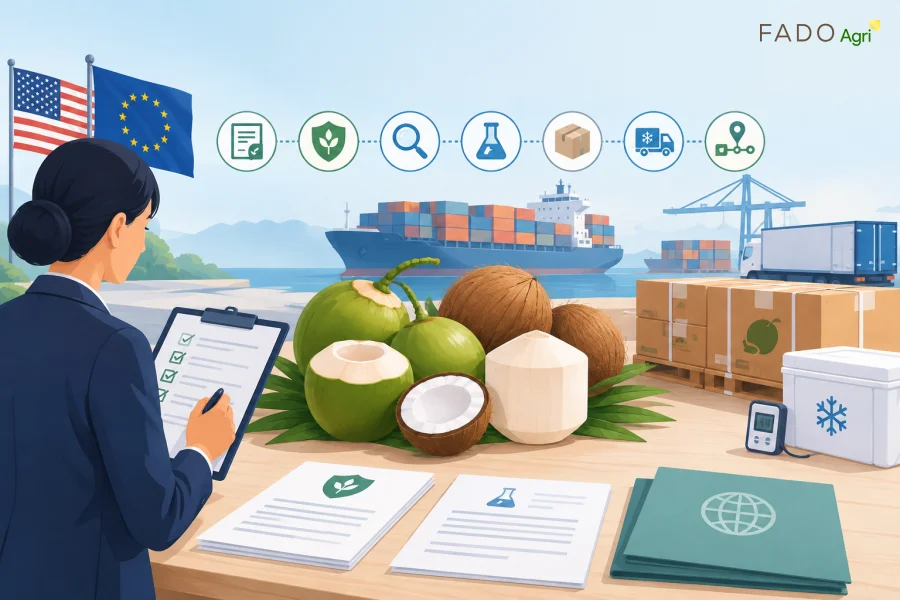
For fresh coconut imports, there is no single checklist that automatically applies to every product and shipment. Requirements can depend on the coconut’s preparation, country of origin, intended use, packaging and destination. Importers should confirm current admissibility and documentation with the relevant authorities and their customs broker before placing an order. This guide outlines the checks procurement teams should make for shipments to the United States and European Union.
Start by defining the product and shipment
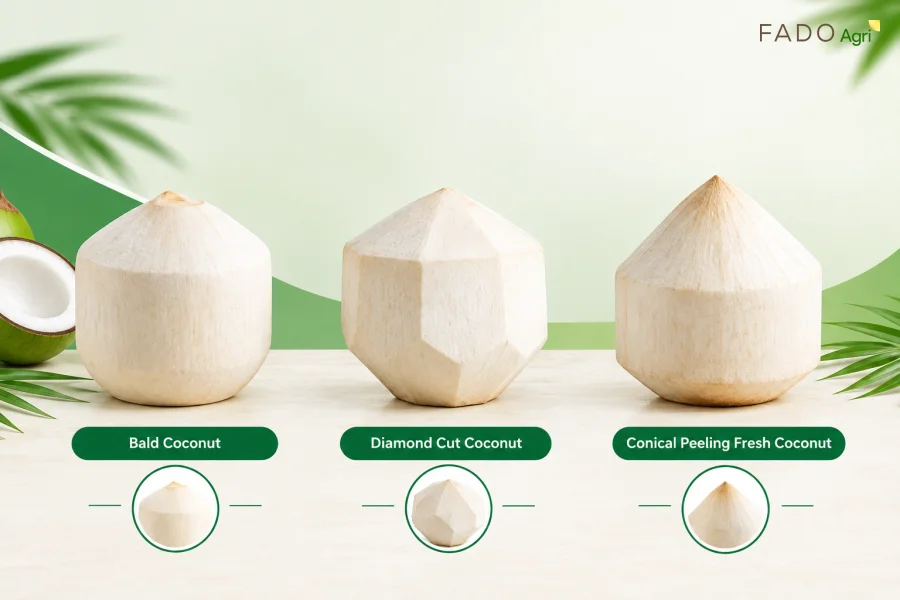
Before requesting a quotation, specify the product form and how it will be presented to consumers or food-service buyers. Whole Green Coconut, Bald Coconut, Conical Peeling Fresh Coconut, Diamond Cut Coconut, Coconut Easy Open and Coconut with Lid On may involve different handling, packaging and labeling considerations.
Provide the exporter and broker with:
- Product name and description, including whether the coconut is whole, peeled, cut or otherwise prepared.
- Country and region of origin.
- Intended use and sales channel.
- Packaging format, materials and unit configuration.
- Expected shipment volume and delivery schedule.
- Any buyer-specific specifications or certification requirements.
Confirm the product’s customs classification with a qualified broker. Do not assume that different coconut formats share the same classification or import conditions.
Core compliance checks for both markets
Import admissibility and phytosanitary documentation
Confirm that the product and origin are eligible for import into the destination market. Ask which phytosanitary measures, inspections or documents apply to the exact commodity and presentation. Where required, arrange a valid Phytosanitary certificate through the competent authority in the exporting country and ensure its details match the shipment documents.
A certificate should not be treated as a substitute for checking destination-specific conditions. Importers should verify the current requirements with the relevant US or EU authorities and the customs broker handling the entry.
Food safety and MRLs compliance
Buyers should agree on the food-safety evidence required before shipment. This may include farm or packing-house records, handling procedures, traceability information and pesticide-residue testing where required by the buyer or destination rules.
Maximum residue limits (MRLs) are substance- and commodity-specific. A general statement that a product is “MRL compliant” is not enough unless the applicable limits, testing scope, laboratory documentation and shipment lot are clear. Agree in writing on:
- Which pesticide residues are included in the testing scope.
- The applicable destination-market limits and the commodity classification used.
- Sampling and laboratory requirements.
- How results are linked to the lot being shipped.
- The process for handling a non-conforming result.
Traceability and supporting records
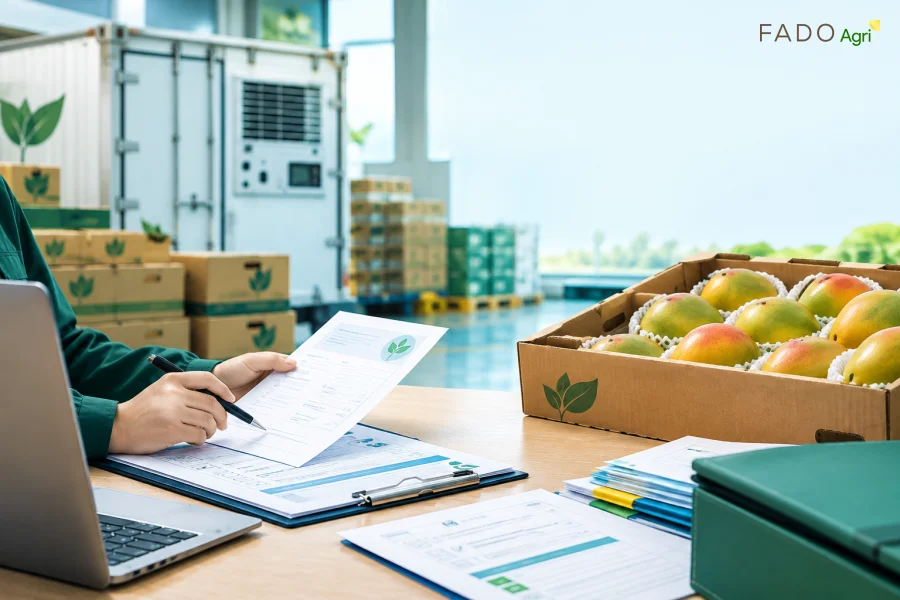
Importers should be able to connect the received lot to its source and handling records. Agree on the lot-identification method and the documents that will accompany or be supplied for each shipment. Depending on the transaction, the document set may include a commercial invoice, packing list, transport document, origin information, product specification and applicable phytosanitary or test documents.
The exact documents required can vary. Ask the importer’s broker to confirm the current entry requirements rather than relying on a generic document list.
US market: points for importers to verify
For a US-bound shipment, check admissibility for the specific product form and origin before confirming the order. Coordinate with the customs broker and relevant US authorities to establish what applies to the commodity, shipment and importer. Food-safety obligations and entry procedures may depend on the parties and activities involved; do not assume that one document or registration covers every participant or product.
Before dispatch, confirm:
- Whether the product and origin can be imported under current conditions.
- Which phytosanitary documents, inspection steps or other measures apply.
- What food-facility, food-safety or prior-notice requirements apply to the transaction, if any.
- The required entry data and document format for the broker.
- Any buyer specifications for testing, packaging, labeling or traceability.
EU market: points for importers to verify
For EU-bound shipments, confirm the applicable conditions for the product and country of origin with the responsible import authority and customs broker. Check whether plant-health controls, food-safety controls or other official checks apply to the specific shipment. Requirements and procedures should be reviewed against the current rules and the product’s classification, not inferred from another fruit or coconut format.
Before dispatch, confirm:
- Whether the product and origin are eligible and under what conditions.
- Whether a Phytosanitary certificate, additional declaration or inspection is required.
- The applicable food-safety and MRL requirements.
- The required import, traceability and labeling information for the destination country and sales channel.
- Any additional standards set by the retailer or procurement partner.
Product specification checklist
Use a shipment specification that records the agreed commercial and quality criteria. Set measurable limits with the supplier rather than relying on broad descriptions such as “premium” or “export quality.” The values below should be completed and approved for each product and buyer; no universal values are implied.
| Specification item | Details to agree before order confirmation |
|---|---|
| Product form | Whole, peeled, cut or other agreed preparation; use the precise product name |
| Size and weight | Buyer-approved range, measurement method and tolerance |
| Maturity and appearance | Agreed indicators, acceptable variation and rejection criteria |
| Defects | Permitted defects and the method for inspection |
| Packaging | Material, pack count, net or gross weight and pallet configuration |
| Marking and labels | Required product, origin, lot and handling information; confirm destination rules |
| Shelf-life expectations | Agreed period and conditions, supported by product-specific evidence |
| Temperature and handling | Written handling range and monitoring responsibilities, validated for the product |
| Documents | Shipment-specific list agreed with the importer and broker |
| Claims and certifications | Only those verified, current and accepted by the buyer and destination market |
Cold Chain logistics and shipment planning
A successful export depends on more than the container booking. Align harvesting, packing, pre-shipment checks, loading and transit planning so that the product is handled consistently. For a Reefer container, agree on the set point, ventilation, loading pattern, monitoring method and responsibility for responding to temperature deviations. These parameters should be based on the product specification and validated handling guidance; do not apply an unverified temperature range to every coconut format.
Before loading, the importer and exporter should confirm that the container is suitable, clean and prepared for the cargo. Record relevant pre-cooling and loading checks where these are part of the agreed procedure. Discuss transit time, destination handling and contingency plans, particularly when routing or seasonal conditions may affect arrival quality.
Commercial terms and buyer due diligence
Before approving a supplier, request a current product specification, sample or inspection plan where appropriate, document list, shipment schedule and written explanation of how lots are identified and checked. Confirm which party arranges each certificate, inspection, test and clearance activity, and who bears the cost if a shipment is delayed or rejected.
GlobalGAP, organic claims and other certifications should be treated as buyer or program requirements only after their scope, validity, product coverage and site coverage have been checked. Do not infer that a supplier, farm or shipment is certified from a general company statement.
Frequently asked questions
Is GlobalGAP mandatory for every fresh coconut shipment to the US or EU?
Do not assume it is mandatory for every shipment. A buyer, retailer or sourcing program may require it, while applicable legal requirements depend on the product and destination. Confirm the buyer’s specification and verify any regulatory claim for the specific shipment.
Does every fresh coconut shipment need a Phytosanitary certificate?
Not necessarily. The requirement can depend on product form, origin and destination conditions. Check the current official requirements before booking or dispatching the shipment.
Can one specification be used for both the US and EU?
A shared commercial specification may be a useful starting point, but import conditions, labeling expectations and buyer requirements can differ. Review the documents and compliance checklist separately for each destination.
What should an importer request before confirming an order?
Request the product specification, lot-traceability approach, proposed document list, applicable test evidence, packaging details and shipment plan. Have the customs broker confirm destination-specific entry requirements before cargo is dispatched.
Plan the shipment around verified requirements
For a reliable procurement decision, define the product precisely, confirm import conditions for its origin and destination, document the agreed quality criteria and align the Cold Chain logistics plan before shipment. FADOAgri can provide product information for B2B enquiries; product specifications, MOQ, seasonal availability and FOB/CIF quotation should be confirmed for the requested order.
Contact the export sales team at [email protected] or WhatsApp: +84 908 479 339 to request current product specifications and discuss an export quotation. Importers should independently confirm regulatory requirements with the relevant authorities and their customs broker before dispatch.