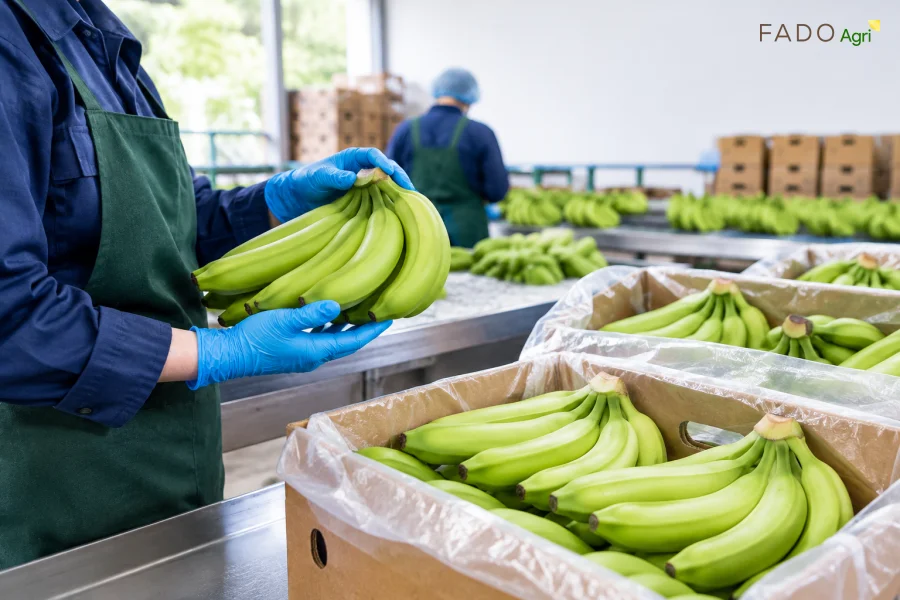

A tropical-fruit shipment can face residue-compliance problems when pesticide use, destination-market requirements, lot records and test evidence are not aligned. For importers and procurement teams, the useful question is not whether a supplier makes a broad compliance claim, but whether the requirements and evidence apply to the specific fruit, market and lot being purchased. This guide sets out a practical control sequence from pre-order checks to shipment release.
Why MRL control matters in tropical-fruit export
Maximum residue limits (MRLs) are limits set under a regulatory framework for pesticide residues in or on food. The applicable requirement can depend on the destination market and commodity, so buyers should confirm it for each sourcing decision rather than rely on a generic limit or supplier statement. MRL review is one part of import compliance; it does not replace checks on pesticide-use authorization, other food-safety requirements or import documentation.
Treat the destination market and commodity as the starting point
Before approving a crop or order, identify the intended destination, fruit type and relevant product specification. A requirement applicable to one commodity or market should not be assumed to apply to another. Rules can also change, so confirm current requirements through the relevant official authority or a qualified compliance resource at the time of procurement and shipment review. Do not rely on an old limit table or an unreferenced summary as the sole basis for a release decision.
Separate assurance claims from shipment-specific evidence
Farm assurance, pesticide-use records and laboratory reports each provide different kinds of information. A certification may cover specified activities or sites, but its scope must be checked; it does not automatically establish the residue status of every fruit lot. Records can show what was documented about crop management, while a laboratory report describes the sample tested within its stated analytical scope. None should be treated as a universal guarantee of market acceptance.
Set the compliance requirements before production and purchase
Agreeing on the applicable requirements before production or purchase gives the buyer and supplier time to address gaps before fruit is packed or dispatched. It also helps prevent a test from being ordered against the wrong commodity, market or buyer specification. Put the agreed requirements and responsibilities in a clear product-and-market brief.
Build a product-and-market requirement brief
Record the intended destination market, fruit type, supply period and any buyer-specific residue requirements. Separate statutory requirements from retailer, distributor or contract specifications: a private buyer requirement may be stricter or more specific, but should not be described as a universal legal rule.
For each requirement, identify who is responsible for confirming that it is current and where authoritative information will be obtained. If the buyer’s specification and the supplier’s understanding differ, resolve the difference before confirming the order. Where the product may be sold into more than one market, assess each destination separately instead of assuming that one review covers them all.
Agree on responsibilities and escalation before ordering
Set out who will provide farm and lot records, who will arrange or review testing, and who has authority to hold or release a shipment. Agree how the parties will handle missing documents, unclear test scope or a result that needs interpretation. These responsibilities should be aligned with the contract and the buyer’s own compliance process; they should not be inferred from a general supplier assurance.
Review pesticide-use controls and farm records
A residue-control review should look beyond a promise that pesticide use is managed. Buyers need to understand which records are available and whether they relate to the crop and production period behind the offer. These records can support a risk review, but they do not independently prove the residue level of a specific shipment.
Check whether pesticide records are relevant to the offered crop
Ask how pesticide applications are authorized, recorded and reviewed for the relevant growing operation. Depending on the supplier’s system and applicable requirements, useful records may identify the product or active substance, application date, crop or growing area, and responsible operator. Confirm what is actually documented rather than assuming a particular process is in place.
Where relevant, ask how product instructions, restrictions and pre-harvest intervals are handled. These details must be interpreted under the applicable product directions and local rules; a buyer should not apply a generic interval as though it were valid for every pesticide, crop or market. If records are incomplete or cannot be connected to the product offered, treat that as an evidence gap to resolve.
Connect farm controls to harvest and lot identity
Check whether the supplier can explain how the growing area or farm records connect to harvest and packing identifiers for the offered lot. The purpose is to make the evidence reviewable: a pesticide-use record for an unrelated crop or period offers little support for a particular consignment. Ask the supplier to clarify any changes in lot references between harvest, packing and shipping documents.
A coherent record trail supports investigation and decision-making. It is not a substitute for applicable market requirements or appropriate test evidence, and it does not by itself guarantee acceptance by an importing authority or buyer.
Plan sampling and laboratory testing around the decision
Testing is useful only when the sample, analytical scope and intended decision are understood. A single report should not be treated as conclusive for every fruit, lot, pesticide or destination market. Agree on the purpose and scope of testing with the supplier and qualified parties before relying on the result.
Define the sampling purpose and lot scope
First determine which lot or lots the test is intended to represent and what decision it will support. Agree who selects and handles samples, how the sample will be identified, and how its connection to the relevant lot will be documented. Sampling arrangements should be fit for the product and decision; do not improvise sample quantities or handling rules without an appropriate procedure.
Where records are available, keep the sample identity, collection date and lot reference together with the report. If a sample cannot be reliably linked to the offered lot, the result may not answer the buyer’s shipment-specific question.
Review the report’s method, coverage and limitations
Check that the laboratory and analytical scope are appropriate for the intended market and the residues being assessed. Review the report for the product and sample identity, the substances or analytical coverage stated, the result units, and any stated method or reporting limitations. If the report’s scope is unclear, ask the laboratory or a qualified compliance contact to explain it before comparing the result with a requirement.
A report must be assessed against the correct commodity and current destination-market requirements. Do not assume that a report covering some residues addresses every relevant substance, or that a result for one lot applies to another. Avoid using a test as a substitute for reviewing farm records and other applicable import conditions.
Use a documented lot-release decision
A release gate brings the requirement brief, supplier records and test evidence together before dispatch. It reduces the chance that a missing or mismatched document will be mistaken for a pass. Document the decision, the evidence reviewed and any follow-up required.
Apply a buyer’s pre-dispatch evidence check
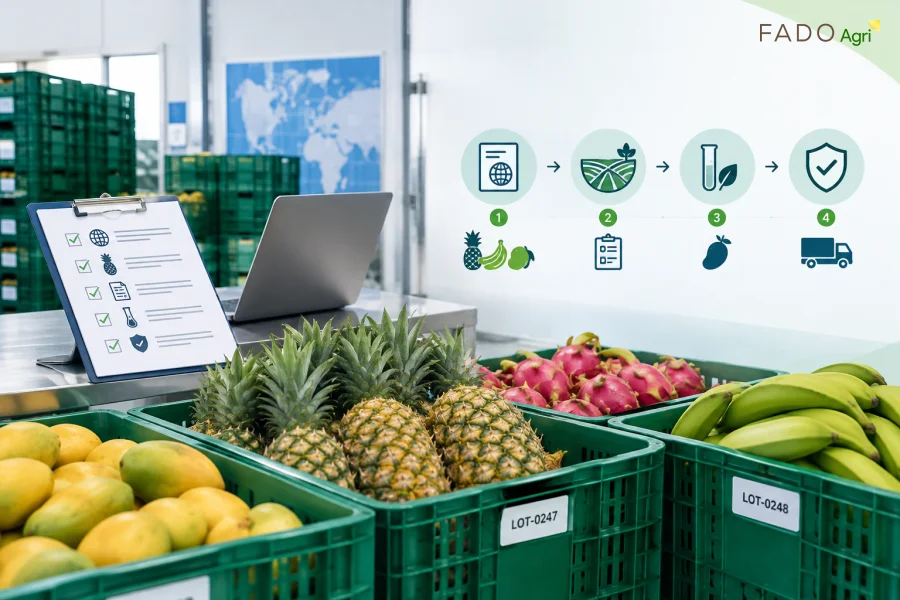
Use this sequence for each relevant lot:
- Confirm the requirement: Match the fruit and destination to current applicable requirements and buyer specifications.
- Match the evidence: Check that farm records, sample details and test reports correspond to the crop, period and lot under review.
- Identify gaps: Record missing records, unclear analytical coverage, inconsistent lot references or results that cannot be compared with the applicable requirement.
- Decide and document: Record whether the lot can proceed under the buyer’s process, needs clarification, or should remain on hold pending further review.
Phytosanitary certificates and other shipment documents may be necessary for import processes, but they serve different purposes from residue evidence. A document set should not be treated as proof that every MRL requirement has been met or that customs clearance is guaranteed.
Escalate gaps instead of assuming compliance
Warning signs include a report that does not identify the relevant lot, records that refer to a different crop or production period, or a test scope that cannot be compared with the requirement. In these cases, pause the release decision and request clarification from the supplier, laboratory or qualified regulatory adviser as appropriate. Do not resolve uncertainty by assuming that a certificate, verbal assurance or unrelated test result covers the gap.
Questions importers should ask a tropical-fruit supplier
These questions help procurement teams request evidence that is specific to the order rather than relying on general assurances. Adapt them to the destination market, contract and buyer’s internal review process. The answers should clarify what evidence is available and what it can establish.
- Which destination market and product specification apply to this offer, and who confirms that the requirements are current?
- What pesticide-use records are available for the relevant crop and production period?
- How are the growing area, harvest and packing identifiers connected to the offered lot?
- Has testing been performed for this lot? If so, what sample and analytical scope does the report cover?
- Who reviews an incomplete, unclear or non-matching result, and what is the agreed hold or escalation process?
- Which documents are available for review, and what are their stated scope and limitations?
A clear answer may be that particular evidence is not available. That is useful information for procurement: it allows the buyer to assess the gap before confirming an order or shipment decision.
Frequently asked questions about MRL control
These questions address common points that arise when buyers compare supplier assurances with shipment-specific evidence. The answers are deliberately qualified because the relevant requirements and evidence depend on the product, market and lot.
Does a farm certification guarantee that a shipment meets MRL requirements?
No single certification claim should be treated as a universal guarantee. Check what the certification covers and whether it applies to the relevant operation, then review product-, market- and lot-relevant records and test evidence separately.
Can one test report establish compliance for every lot and market?
Not by itself. Its relevance depends on the sample’s connection to the lot, the analytical scope and the requirement for the specific commodity and destination. A result should not be generalized beyond its stated scope.
When should importers confirm the applicable requirements?
Confirm them before committing to the order, then review them again at the relevant procurement or shipment decision point. Use current authoritative information for the specific product and destination rather than assuming that an earlier review remains sufficient.
Discuss tropical-fruit sourcing requirements with FADOAgri
If you are assessing a tropical-fruit offer, discuss the product specifications and export-sourcing requirements relevant to your destination market with FADOAgri. Contact our team to start a B2B sourcing discussion; any product-specific documents or evidence should be confirmed for the order in question.
- WhatsApp/Hotline: (+84) 908 479 339
- Email: [email protected]
Phone: 0908 479 339 · Website: FADOAGRI · Contact us