

Dehydrated coconut meat may be worth assessing for new food and personal-care concepts, but the ingredient name alone does not establish its composition, performance, or suitability. Importers and product developers should first confirm the exact product form and processing, then evaluate it against the needs of a specific formulation. This guide outlines potential areas to investigate, distinguishes dehydrated meat from other coconut ingredients, and sets out practical questions to ask suppliers before advancing a commercial opportunity.
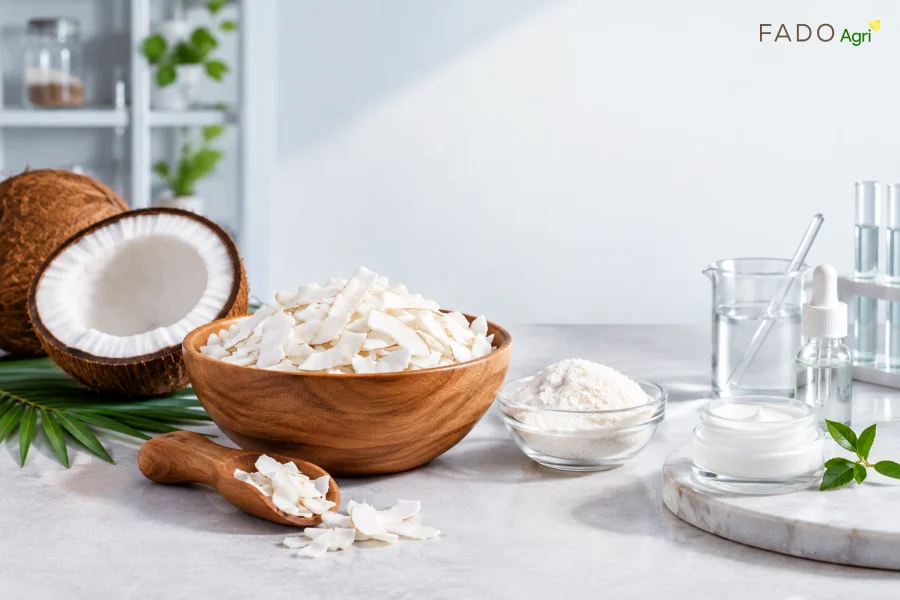
What dehydrated coconut meat can—and cannot—tell a product developer
“Dehydrated coconut meat” generally describes coconut flesh from which moisture has been removed, but the term does not specify how the material was processed or what properties it has. A supplier’s product definition and documentation are therefore essential. The opportunities below are development possibilities to assess, not evidence of widespread adoption or confirmed performance.
Start with the exact ingredient and process
Dehydrated coconut meat is not interchangeable with coconut oil, coconut milk, or coconut extracts. These are different ingredient forms, and information about the composition, formulation behavior, or benefits of one should not automatically be applied to another. Even products all described as dehydrated coconut meat may differ in form and processing, so buyers should request details for the material actually offered.
Before discussing an application, establish whether the product is supplied as pieces, flakes, particles, powder, or another form. Ask how it is processed and what specifications are available. Do not assume a particular particle size, moisture level, composition, storage condition, or shelf life without product-specific documentation.
The distinction matters commercially as well as technically. A concept that calls for visible coconut pieces raises different formulation questions from one that requires a finely milled ingredient or a material for further processing. Treating the ingredient name as a complete specification can lead to unsuitable comparisons or unsupported product claims.
Potential roles in functional-food development
Food developers may explore dehydrated coconut meat as an ingredient in concepts that include coconut pieces or particles. Whether it fits a particular product depends on the material’s documented properties and its behavior in the finished formulation. Its presence alone does not establish a nutritional or physiological effect.
Assess the food format before making a function claim
Begin with the intended product and the role the ingredient is expected to play. For example, a developer might assess whether a particular form works in a product where coconut pieces or particles are part of the eating experience. That is a formulation question, not confirmation that the ingredient is already used commercially in a specific category or will perform as intended.
Relevant questions may include:
- Does the supplied form suit the intended product and processing steps?
- What do the supplier’s specifications say about the material’s composition and physical characteristics?
- How might the ingredient affect the product’s texture, appearance, flavor, or consistency?
- Is there analytical or trial evidence for the exact material under consideration?
- Does the finished formulation need additional testing to assess quality during storage or distribution?
Do not infer a specific outcome from the word “dehydrated.” The process description and available data—not the ingredient label alone—should guide decisions about formulation and handling. Product trials may also be needed to assess how the ingredient interacts with other components and the manufacturing process.
What evidence supports nutrition and product-positioning claims?
“Functional food” is a product-positioning term, not proof that an ingredient delivers a particular health effect. If a business intends to make a nutrition or function-related claim, it needs evidence relevant to the exact ingredient, the amount used, the finished product, the proposed claim, and the destination market. General information about coconut or another coconut ingredient is not a substitute for that evidence.
Ask for product-specific composition and analytical information before comparing dehydrated coconut meat with coconut oil, coconut milk, or extracts. If the supplier provides documents, check what they actually measure and whether they apply to the offered product or batch. Claims should not go beyond what the evidence supports.
Cosmetics: assess the ingredient form before assigning a role
Cosmetic development calls for a separate assessment from food formulation. The material must be evaluated for its intended role in a particular product, and any proposed claim should be supported for that specific ingredient and use. Properties associated with coconut oil or extracts should not be transferred to dehydrated coconut meat by assumption.
Do not transfer claims from coconut oil or extracts
First clarify whether the proposed cosmetic concept uses the dehydrated material directly, uses it as a starting material for further processing, or refers to another coconut-derived ingredient. These are different scenarios. A supplier should document what the offered material is and how it is intended to be used before a product team evaluates it.
If the material is being considered in a physical form such as pieces or particles, developers may need to assess its fit with the intended formula, manufacturing process, and product experience. This is a question to investigate—not a claim that dehydrated coconut meat has a proven cosmetic function or particular effect on skin.
Match formulation and claim evidence to the intended use
Ask whether the supplier can provide documentation relevant to the proposed cosmetic application, including product identity, available quality information, and any data supporting a specific claim. Assess the material in the context of the full formula and finished product; general statements about coconut do not establish compatibility, safety, or efficacy for a particular cosmetic.
Safety assessment, product requirements, and permitted claims may depend on the destination market and the finished product. Buyers should identify the intended market and obtain appropriate regulatory or technical advice for the product they plan to develop. Do not treat a general ingredient description as confirmation of compliance.
Compare food and cosmetic opportunities using buyer evidence
Food and cosmetic projects have different development goals, so buyers should not evaluate them using one generic claim about coconut. The comparison below is a screening tool for discussion with suppliers, not confirmation that dehydrated coconut meat is suitable for either application. The evidence needed will depend on the product, ingredient form, intended use, and market.
| Application area | Initial development question | Evidence to request | Claim caution |
|---|---|---|---|
| Food products | Does the supplied form fit the intended recipe and processing method? | Product definition, processing description, available specifications, and relevant analytical data | Ingredient presence alone does not establish a nutritional or physiological effect |
| Cosmetic products | What role is the exact material intended to have in the formula? | Product identity, relevant quality documentation, and data supporting any proposed claim | Do not infer benefits from coconut oil, extracts, or coconut generally |
| Further processing | Is the material intended for direct use or as an input for another ingredient? | Supplier documentation describing the material, process, and intended use | Do not assume a derived ingredient has the same properties as the starting material |
For both categories, the central question is whether the evidence matches the material being offered and the intended finished product. If those details are not available, keep the opportunity at the concept-assessment stage rather than treating a broad ingredient description as a validated specification.
What importers and product developers should request
A structured supplier inquiry helps procurement teams compare like with like and identify missing information early. Request documentation for the exact product under discussion, then assess whether it supports the proposed application and destination market. The list below is a starting point; not every document or test will be relevant to every use.
Build a product-specific evidence file
Ask the supplier for:
- Product identity: the product name, definition, ingredient form, and intended use, if specified.
- Processing information: a description of the process and any available details relevant to the intended application.
- Specifications and analysis: available product specifications and analytical or quality documents relevant to the buyer’s requirements.
- Packaging and handling information: details the supplier can document for the offered product.
- Traceability information: batch identification or traceability details, where applicable.
- Claim support: the exact claims supported by the documents and the material, product, or batch to which the evidence applies.
Do not assume that a supplier has a particular test result, certification, quality system, or compliance status. Request the relevant documents and check their scope. A document may describe a general process or product category without establishing that a specific batch meets a buyer’s requirements.
Resolve application and destination-market requirements early
Before requesting a quotation or planning a trial, share the intended use, destination market, and buyer specification with the supplier. Clarify which technical, safety, quality, or shipment documents the buyer expects and determine which requirements apply to the finished food or cosmetic. Requirements can differ by market and use, so an ingredient description alone is not a complete import assessment.
A practical discussion checklist is:
- Identity: What exact material and form is being offered?
- Specification: Which product-specific specifications and analytical documents are available?
- Evidence: What claims or application statements do those documents support?
- Intended use: Is the material being considered for food, cosmetics, or further processing?
- Market: Which destination and product requirements must be addressed?
- Relevance: Do the documents apply to the product or batch under consideration?
- Commercial terms: What quotation, packaging, and shipment details can the supplier confirm?
This process helps buyers distinguish an early-stage concept from a sourcing decision supported by relevant evidence.
Questions buyers commonly ask
Two questions often arise when teams consider dehydrated coconut meat for food or cosmetic development: whether the ingredient is automatically “functional,” and whether claims about other coconut materials apply to it. In both cases, the answer depends on the exact material, the intended use, and the supporting evidence.
Does dehydrated coconut meat automatically qualify as a functional ingredient?
No. The term “functional” does not establish a health effect or prove suitability for a particular product. Any nutrition or function-related claim needs appropriate support for the exact ingredient, finished product, claim, and intended market.
Can cosmetic benefits of coconut oil be attributed to dehydrated coconut meat?
Not by default. Coconut oil and dehydrated coconut meat are different ingredient forms. A cosmetic role or claim must be assessed for the material actually used and the finished formulation; claims about coconut oil or extracts do not establish the performance of dehydrated meat.
Discuss sourcing requirements with FADOAgri
If you are assessing a coconut ingredient for a food or cosmetic concept, define the intended application and the documentation you need before comparing commercial options. FADOAgri’s team can discuss product scope and respond to inquiries about available specifications and export quotation; a specific dehydrated coconut meat product or its availability should be confirmed directly.
Contact FADOAgri at [email protected] or via WhatsApp/hotline at (+84) 908 479 339 to discuss your requirements and request information relevant to your sourcing assessment.
Phone: 0908 479 339 · Website: FADOAGRI · Contact us